
Insulation type and condition
The contractor identifies what's there now—commonly blown-in fiberglass or cellulose, sometimes batts—and checks for settling, voids, and compression.
Describe what you're noticing once and we'll connect you with a local contractor in San Antonio who handles attic insulation evaluations and upgrades.
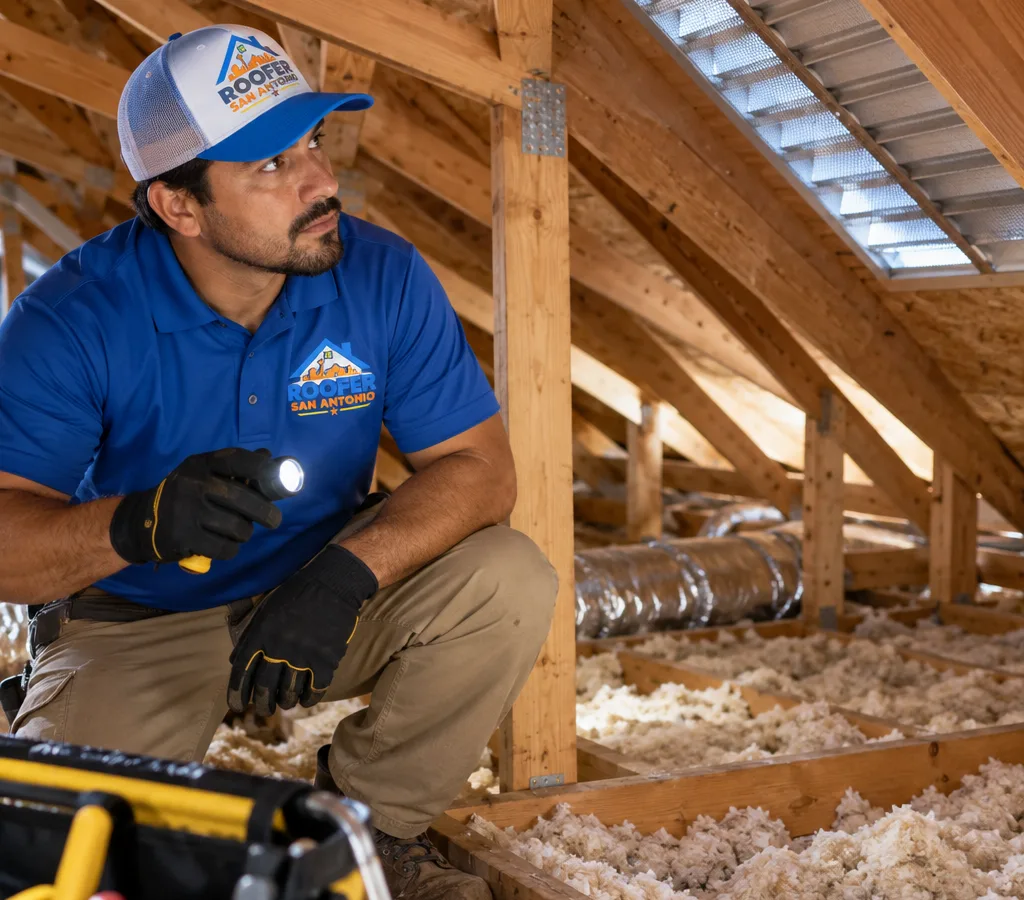
Attics take the brunt of South Texas heat. When insulation is thin, uneven, or disturbed, indoor temperatures tend to swing, HVAC runs longer, and some rooms never feel quite right.
A San Antonio attic insulation project usually starts with a look at the whole attic system, not just the material on the floor. The contractor will check how insulation is distributed, whether air leaks are letting hot attic air mix with indoor air, and whether ventilation is moving heat and moisture the way it should.
Common reasons homeowners start looking into an insulation upgrade:
When you call Roofer San Antonio, you describe the symptoms and what you can see—or suspect—once. We connect you with a local contractor who can assess the attic and explain the upgrade paths for your home.
Because attic conditions often tie back to the roof system, some homeowners also ask a contractor to look at roof ventilation and overall roof condition. A quick conversation can help you decide what to address first.
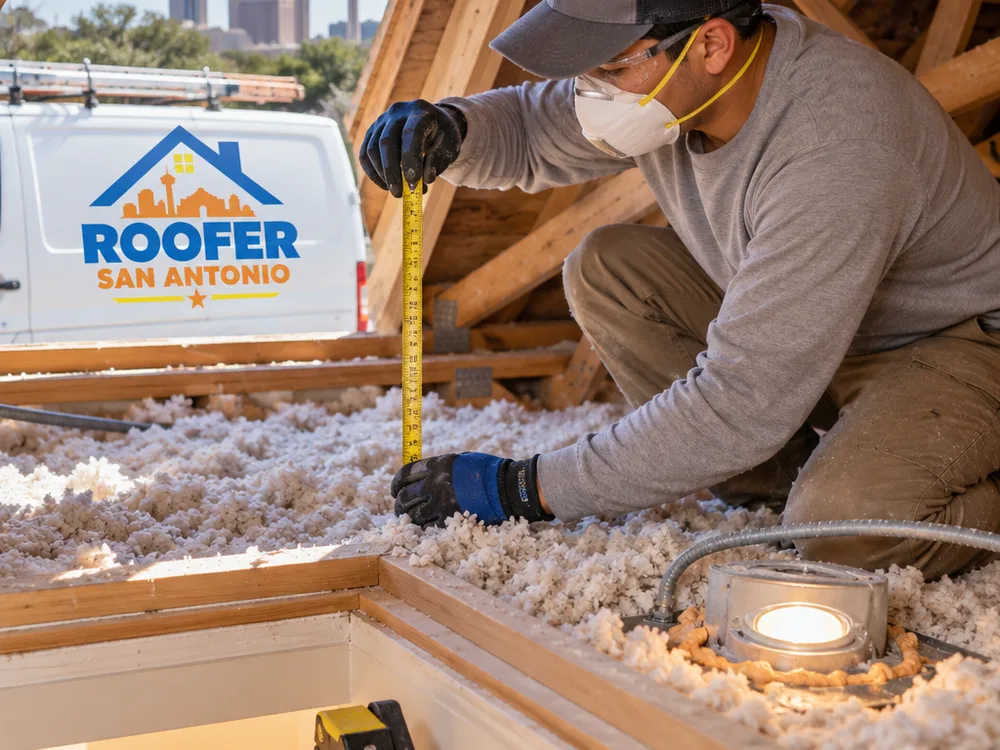
The contractor identifies what's there now—commonly blown-in fiberglass or cellulose, sometimes batts—and checks for settling, voids, and compression.
Gaps around light fixtures, plumbing stacks, attic hatches, and top plates can be sealed so insulation performs as intended instead of covering leaks.
Soffit intake and ridge or roof vents need a clear airflow path. Baffles help keep insulation from blocking soffit vents at the eaves.
If ducts or an air handler are in the attic, the contractor may note disconnected runs, damaged duct insulation, and other issues that affect comfort.
Insulation can hide roof leaks or condensation issues. Expect questions about any past water stains, musty smells, or signs of rodents.
You describe your comfort issues, the home's general age, and anything you've noticed, such as drafts, dust, high attic temperatures, or disturbed insulation. We then connect you with a local contractor who handles attic insulation in San Antonio.
The contractor checks access, measures existing insulation depth, looks for air leaks at ceiling penetrations, and reviews ventilation at soffits and roof vents.
You'll hear practical choices, such as air sealing plus blown-in insulation, targeted repairs where insulation is missing, or removal and replacement if insulation is contaminated or water damaged.
The work area is protected, attic access is managed safely, and any needed baffles, dams to keep material out of soffits and fixtures, and hatch improvements are addressed before new material is blown in.
Insulation is installed to the agreed scope, depth is checked for even coverage, and you get a quick review of what was done and what to watch for moving forward.
If your home feels uneven from room to room, an attic insulation evaluation can help identify whether low coverage, air leaks, or ventilation is contributing. Describe what you're noticing once and get connected with a local contractor who can take it from there.
CALL NOW: (210) 806-7822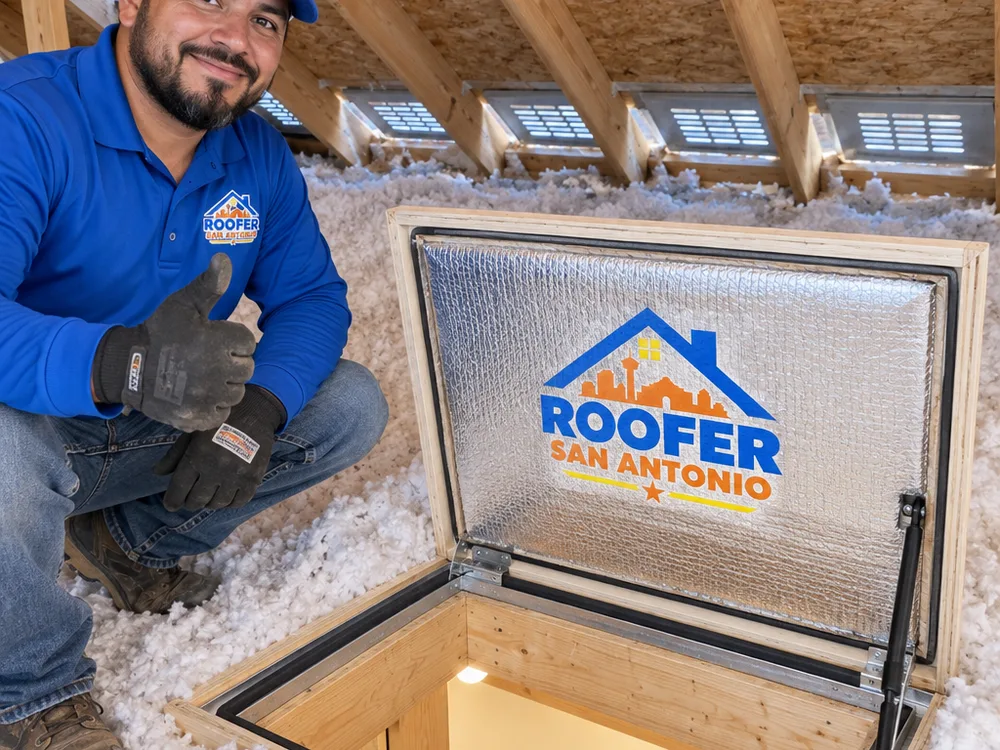
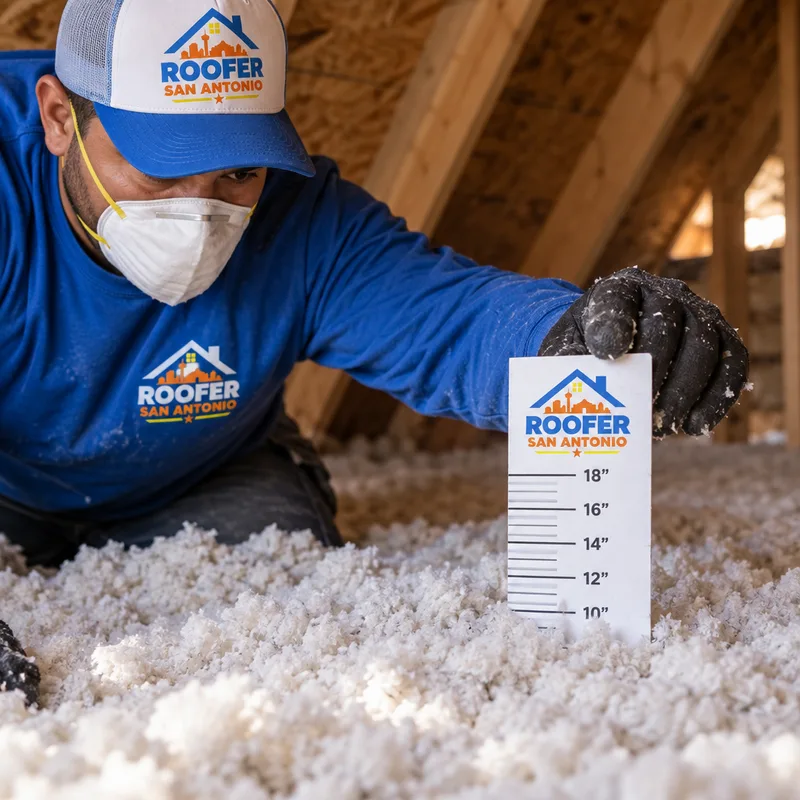
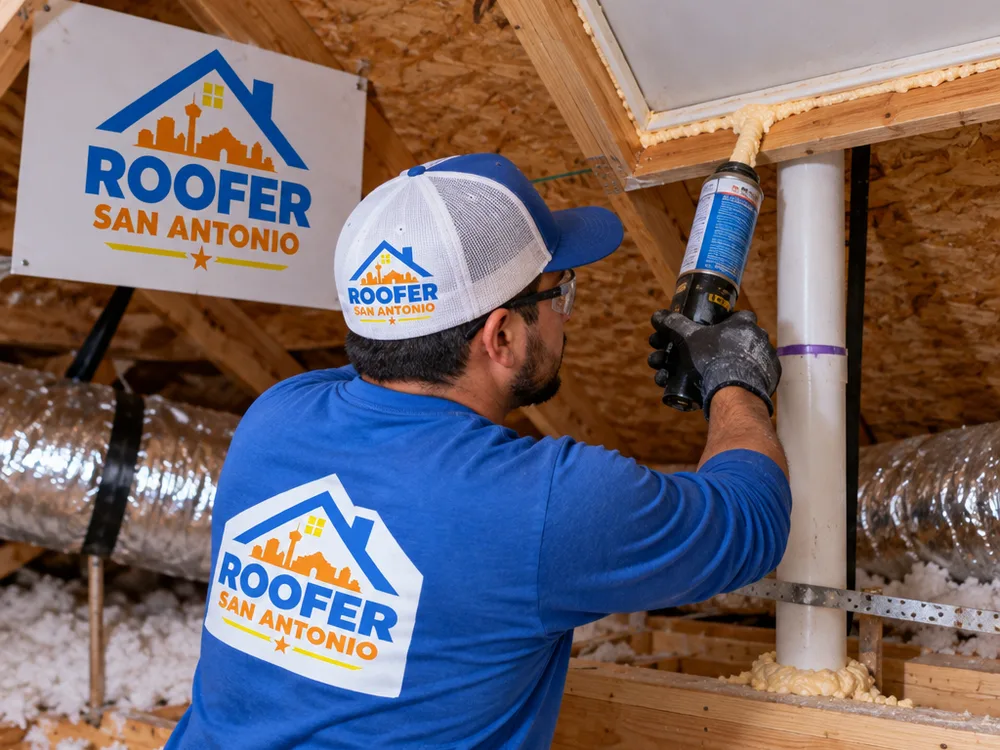
Even coverage, protected ventilation paths, and a properly treated attic hatch all contribute to the finished scope.
Many comfort complaints come from a mix of low insulation and air leakage through the ceiling plane. The contractor typically measures existing insulation depth and also looks for common leakage points like recessed lights, bathroom fan housings, plumbing stacks, attic hatches, and top-plate gaps, because covering leaks with more insulation can leave the underlying issue in place.
Blown-in fiberglass and blown-in cellulose are commonly used for attic floors because they can be installed evenly around framing and wiring. Some homes also have fiberglass batts, which can work well when properly fitted but often end up with gaps or compression around obstructions.
Often it can, as long as the existing material is dry, reasonably clean, and not matted down from moisture or contamination. If there are signs of roof leaks, condensation, or pests, the contractor may recommend removing affected areas first so the new installation starts on a sound base.
Yes, insulation depth and placement can block soffit vents if baffles are missing, which can trap heat and moisture. A contractor will usually check that intake at the eaves stays clear and that roof exhaust vents have a path to move air, since ventilation and insulation work together.
If you can do it safely, note where the attic access is, whether there is flooring for storage, and any areas that feel hottest or coldest inside the house. It also helps to mention recent roof work, bathroom fan issues, or any past ceiling stains, since those can change the approach.
You tell us what you're experiencing and what you know about the attic, and we connect you with a local contractor who handles attic insulation work in the San Antonio area. You then speak with the contractor directly about scope details and whether you want to move forward.
Insulation should not cover an active moisture problem. A contractor will want to identify whether the issue is a roof leak, a bath fan venting into the attic, or condensation from poor ventilation, then address the source before replacing or adding insulation so the new material doesn't get damaged.
If you're thinking about attic insulation in San Antonio, describe the comfort issues and what you've noticed once. We'll connect you with a local contractor who can evaluate the attic and talk through the right upgrade options for your home.
Serving San Antonio and surrounding neighborhoods within roughly 10 miles — Alamo Heights, Stone Oak, Helotes, Leon Valley and more.