
Describe the problem once
Instead of calling multiple companies, you explain the roof type and what you're seeing one time and get connected with a contractor who takes on tile-roof work.
Describe what you're seeing once and we'll connect you with a local contractor who works on clay and concrete tile roofs.

Tile roofs are a system. The tiles shed most of the water, but the roof stays dry because of the underlayment, flashing, and the way valleys, ridges, and penetrations are detailed. That's why tile roofing in San Antonio often comes down to the parts you don't see from the street.
A contractor who specializes in tile will usually start by confirming what kind of tile is on the roof—clay or concrete, and the profile—then looking at how it's installed: where water is supposed to go, where it can get pushed back by wind, and whether the details match the roof's slope.
Common tile-roof work in this area includes:
San Antonio weather can expose weak points quickly. Wind-driven rain finds gaps around sidewalls and roof-to-wall transitions, and heat accelerates aging in exposed sealants. A good tile-roof plan focuses on durable details first, then the visible tile surface.
Roofer San Antonio takes your call and connects you with a local contractor who handles tile systems so you can describe the issue once and move straight into the next step.
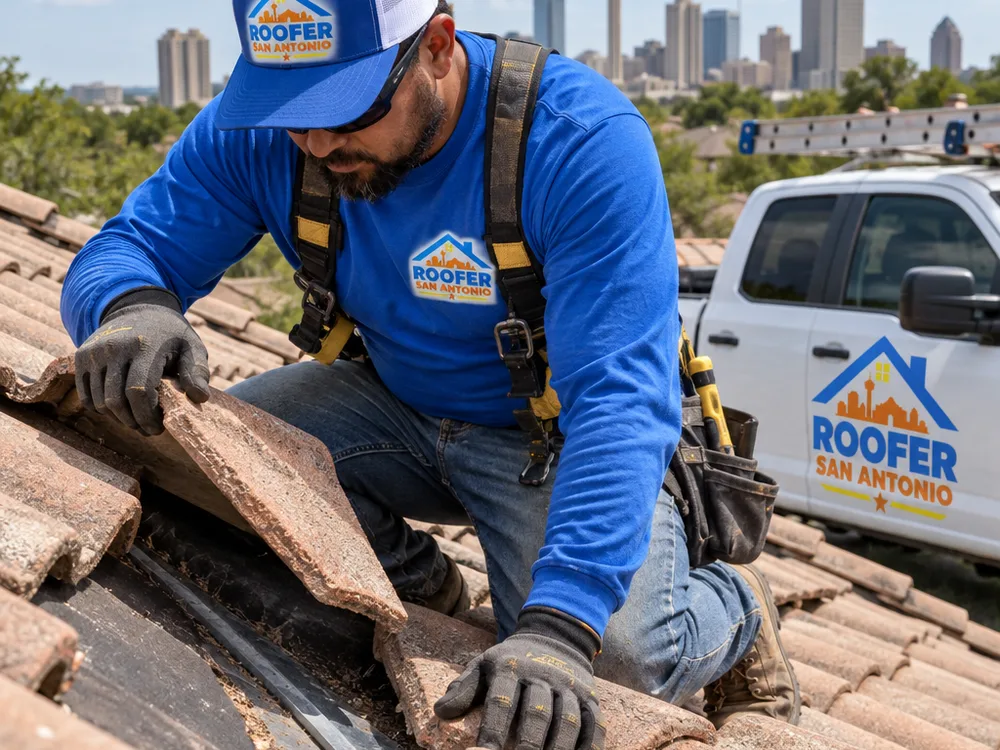
Instead of calling multiple companies, you explain the roof type and what you're seeing one time and get connected with a contractor who takes on tile-roof work.
Tile roofing is different from shingles. We focus the connection on contractors who work with clay and concrete tile systems and the details that control leaks.
The contractors we connect you with serve San Antonio and nearby communities, so you're not routed to someone far outside the area.
You talk to the contractor directly, ask questions, and decide whether to move forward after you hear their plan for the roof.
If you can share the tile type, where the leak shows up inside, and a few photos you've already taken, it helps the contractor understand the likely failure points.
You'll be asked whether the roof is clay or concrete tile, the age if known, and what triggered the call—an active leak, slipped tiles, recurring repairs, or a planned replacement.
The contractor checks valleys, sidewalls, headwalls, ridges, hips, penetrations, and transitions. For tile, the underlayment condition matters as much as the surface tile.
Options may include a localized repair, a partial reset with new underlayment, or a full tile reroof. The scope depends on access, breakage rate, and the original roof details.
Tile is heavy and brittle, so staging, walk paths, and debris handling are planned to reduce breakage and protect landscaping and hardscapes around the home.
After tiles are reinstalled and flashings are secured, the contractor re-checks the water path at valleys and transitions and confirms tile alignment and fastening in the repaired areas.
If your tile roof is leaking, showing slipped tiles, or you're planning a reset or replacement, describe the situation once and we'll connect you with a local contractor who handles tile roofing in San Antonio.
CALL NOW: (210) 806-7822

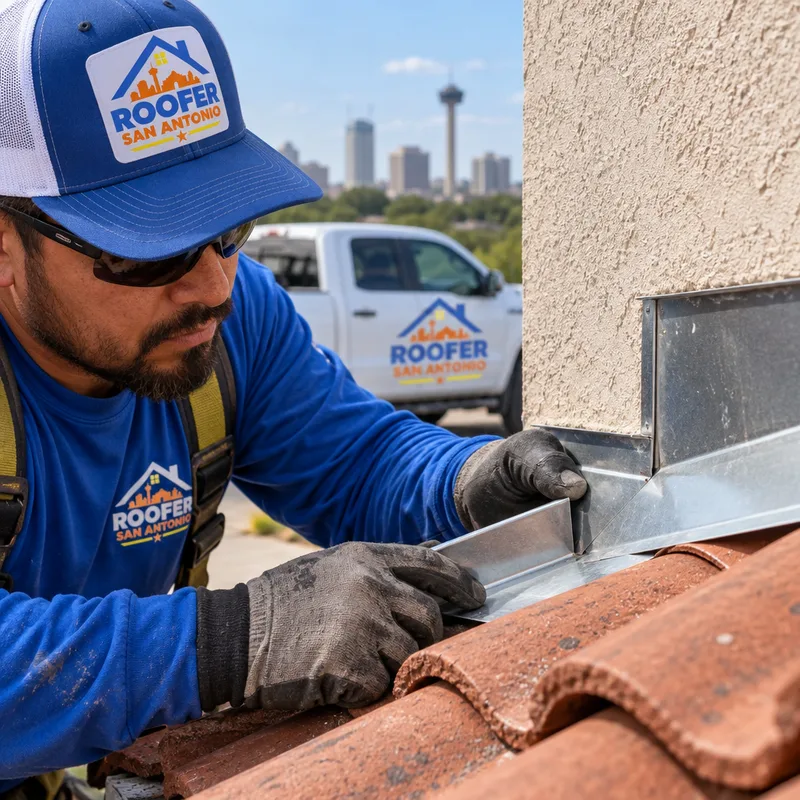
A finished tile roof should look uniform, but long-term performance depends on underlayment and flashing.
Many tile-roof leaks trace back to flashing, valleys, or aged underlayment rather than the single tile you can see from the ground. Tiles shed water, but the secondary water barrier is the underlayment and metalwork around transitions, so a contractor typically follows the water path from the interior stain to the nearest roof detail.
Helpful details include the tile type, the general roof shape, where the leak shows inside, and whether it happens only in heavy rain or also in light rain. Photos of the roof area and interior ceiling stain can help narrow down whether the likely issue is a valley, wall transition, penetration, or broader underlayment problem.
Reusing tile is sometimes possible if enough pieces can be removed without excessive breakage and the tile remains suitable. The contractor will consider brittleness, existing fastener holes, and whether matching replacement tiles are available for pieces that break during removal.
A tile reset is when tiles are carefully removed in an area or across the roof, the underlayment and flashings are replaced or repaired, and the tiles are reinstalled. It may be proposed when the tile surface remains serviceable but the waterproofing layer underneath is worn or has weak details.
Valleys and flashing are where water concentrates and roof planes meet walls or penetrations, so small gaps can become leaks even if the tile field looks fine. Tile roofing relies on correctly layered metal flashing, proper overlaps, and compatible sealants in limited locations—not surface caulk as the primary defense.
You call, describe the roof and the issue once, and we route the request to a local contractor who handles tile systems. You then speak directly with the contractor about the inspection, scope options, and next steps, and you decide whether to proceed.
Tell us whether it's clay or concrete tile, if you know, what you're seeing, and where the problem shows up inside. We'll connect you with a local contractor who works on tile roofing and can talk through repair, reset, or replacement.
Serving San Antonio and surrounding neighborhoods within roughly 10 miles — Alamo Heights, Stone Oak, Helotes, Leon Valley and more.