
Leak troubleshooting and targeted repairs
Diagnosis that separates a seam issue, flashing failure, puncture, or drainage problem so the repair matches the roof system.
Describe the roof issue once and we'll connect you with a local commercial roofing contractor who works on your type of building.
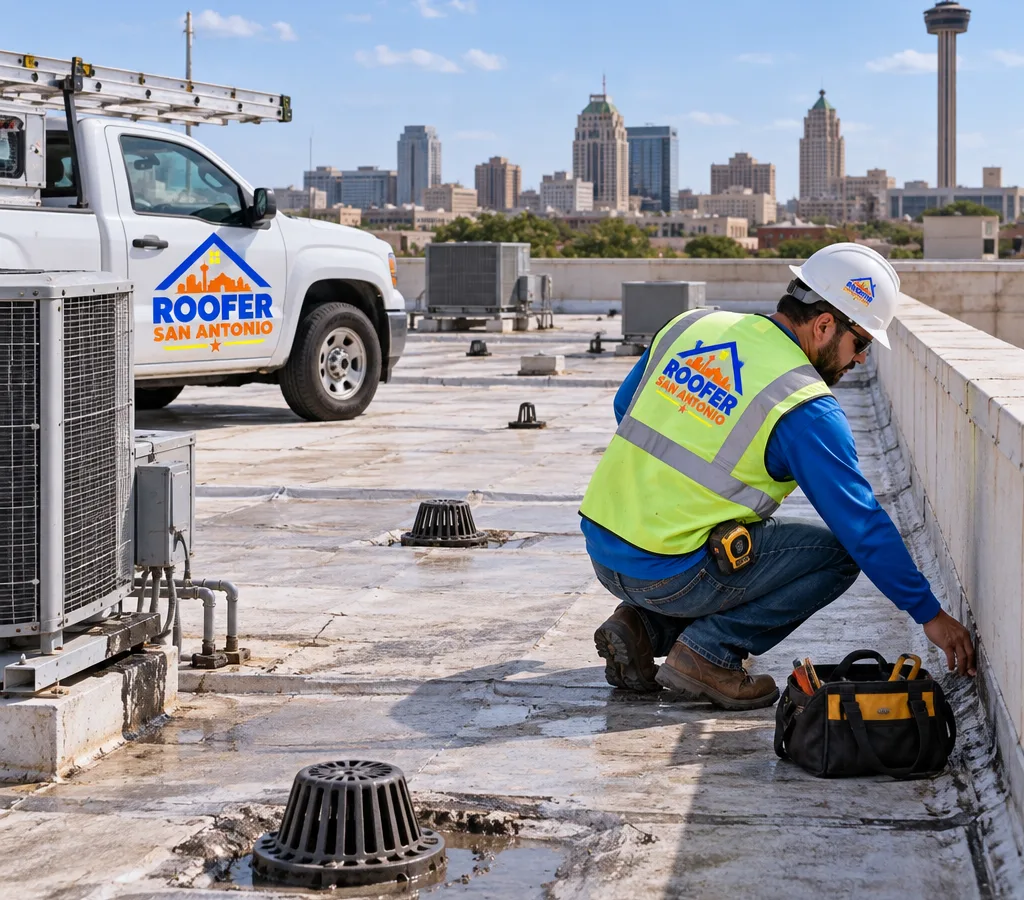
If you're calling for commercial roofers San Antonio TX, the first goal is to get the roof identified and the leak path narrowed down. Commercial roofs fail differently than steep-slope residential roofs, and the right fix depends on the system that's on the building.
A commercial roofing contractor will usually start with:
If you call Roofer San Antonio, you'll talk through what you're seeing—active drips, ceiling stains, wet insulation, membrane bubbles, loose edge metal, or clogged drains. Then we connect you with a local contractor who handles commercial roofing in San Antonio so you can review options directly.
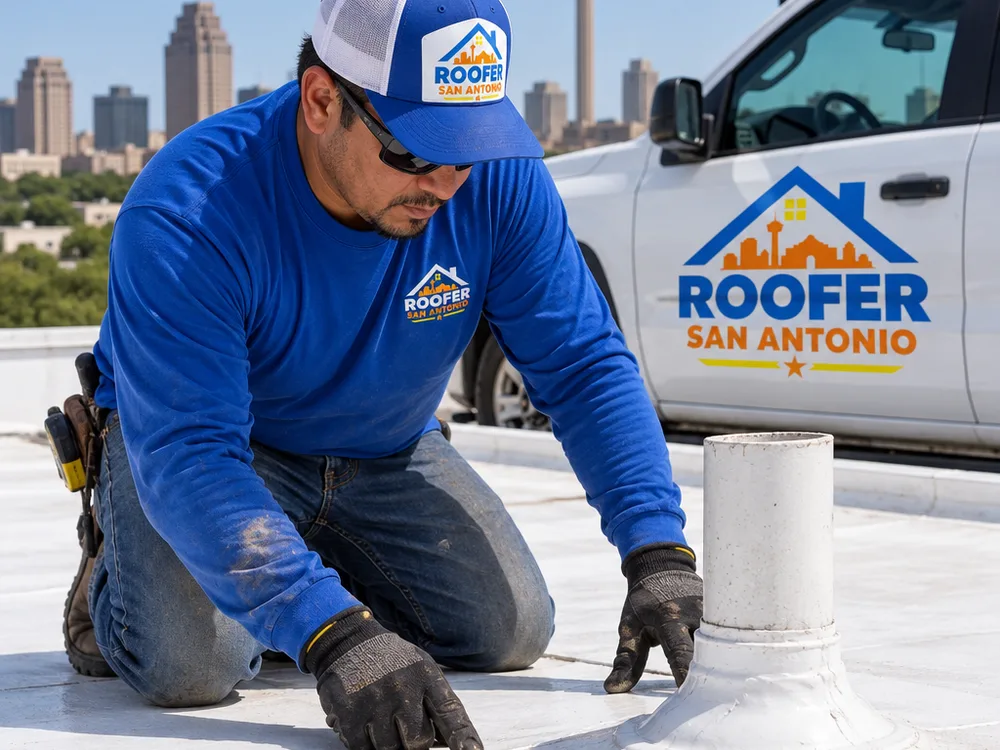
Diagnosis that separates a seam issue, flashing failure, puncture, or drainage problem so the repair matches the roof system.
Routine roof walks, drain clearing, minor detail repairs, and documentation to keep small issues from turning into interior damage.
When the membrane is still serviceable, a contractor may propose coatings or restoration work to extend service life and improve reflectivity.
Options can include overlay where appropriate or a full tear-off when insulation, deck, or trapped moisture makes recovery risky.
A contractor can document what's actually on the roof surface, what's cosmetic, and what affects watertight performance.
Work around curbs, stacks, roof hatches, skylights, and rooftop units where most commercial leaks begin.
Share the building type, roof access details, roof type if you know it, where leaks appear, and whether there's active dripping or only staining.
We match your description to a contractor in the San Antonio area who works on commercial roofs like yours.
You'll talk through likely causes, what they want to inspect, and the difference between a repair, restoration, or replacement approach.
You stay in control: ask questions, compare proposals if you want, and choose whether the scope fits your building and timeline.
If water is getting in, describe where it's showing up and what kind of roof you have. We'll connect you with a commercial roofing contractor serving San Antonio who can take it from there.
CALL NOW: (210) 806-7822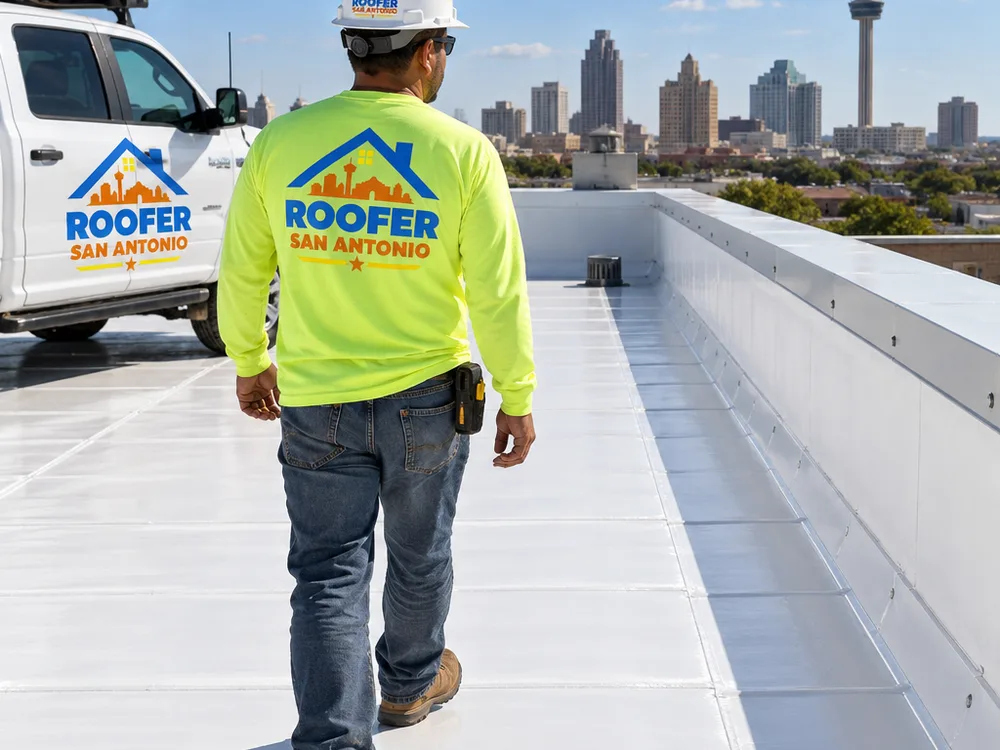
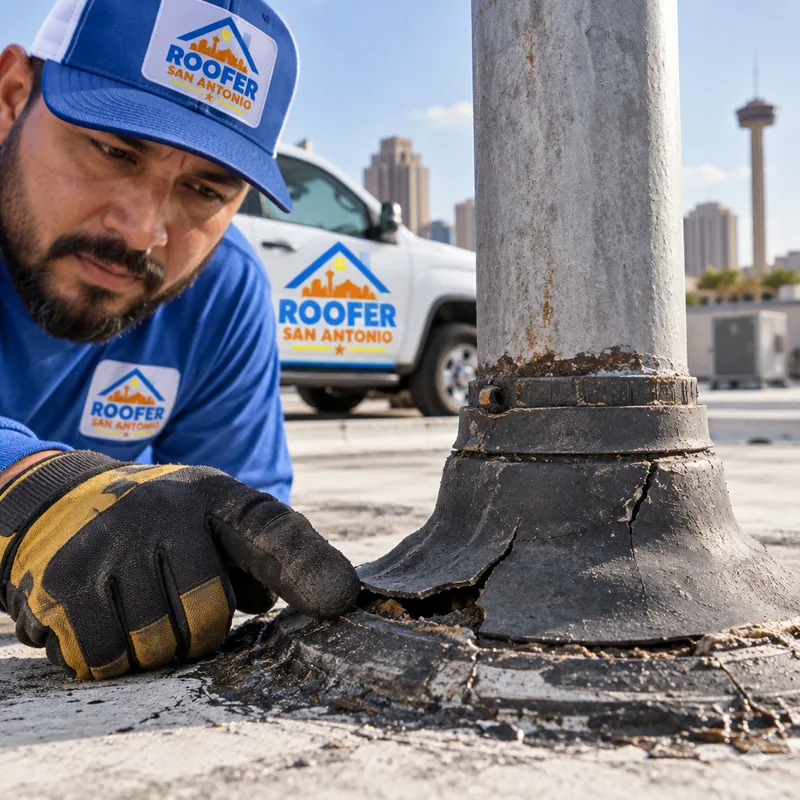
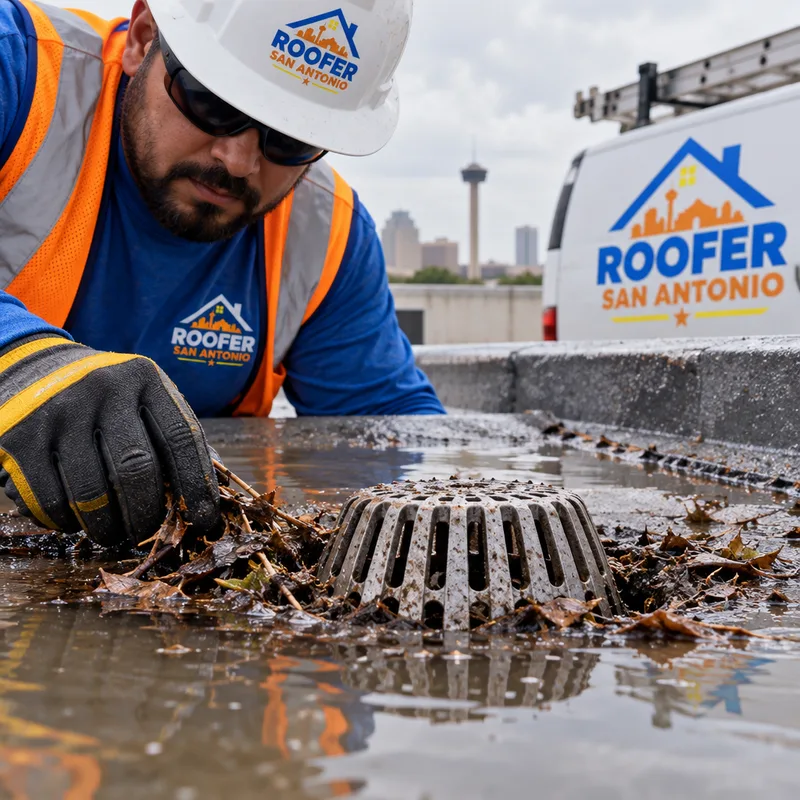
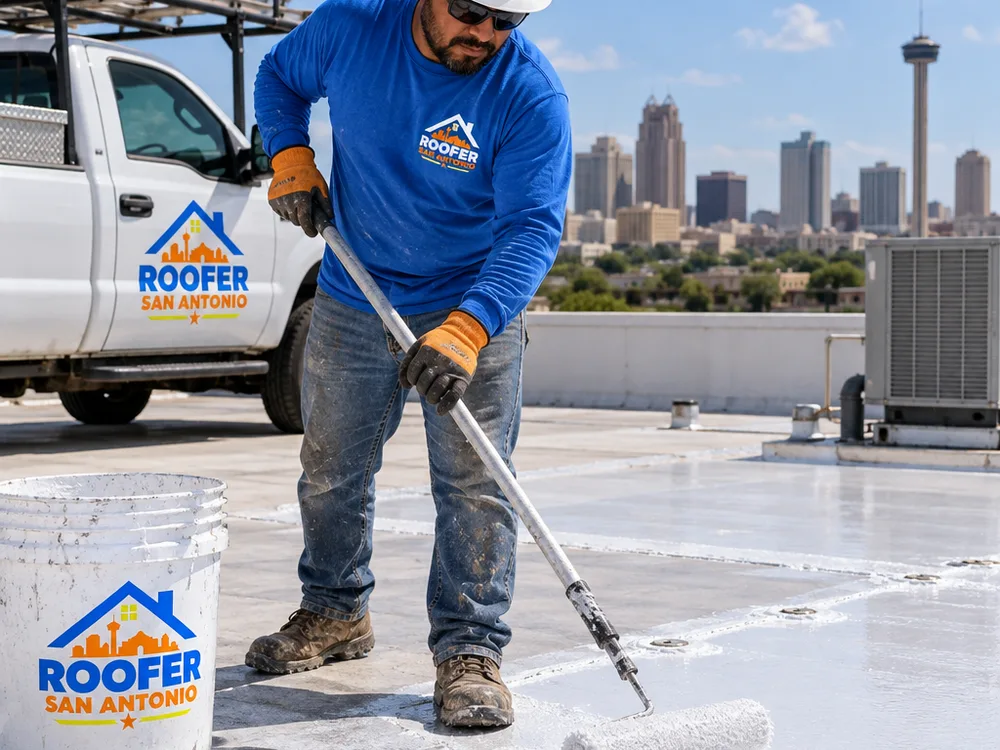
The right scope depends on the roof system condition, how widespread the issues are, and whether moisture is trapped in the assembly. A contractor will look for seam and flashing failures, membrane brittleness, punctures, saturated insulation, and deck concerns; coatings are typically discussed when the roof is still fundamentally intact and dry, while replacements come up when deterioration or wet insulation is extensive.
Have the building address, roof access notes, approximate roof size, the roof type if known—TPO, PVC, EPDM, mod-bit, or BUR—and where water shows inside. If you can safely do so, note whether there are rooftop units, skylights, or parapet walls near the leak area.
No, water can travel along the membrane, insulation, and deck before it shows inside. This is common on low-slope roofs with multiple penetrations and long runs to drains, so contractors often trace the likely path by checking seams, terminations, and penetrations upslope of the interior leak.
Common leak points include penetrations, HVAC curbs, parapet wall flashings, edge metal terminations, skylight curbs, and roof drains or scuppers. On single-ply systems, welded seams and transitions matter; on asphalt-based roofs, splits, blisters, and deteriorated flashings are frequent issues.
Sometimes a contractor may propose a recover if the existing roof and insulation are dry, stable, and suitable for attachment. If there is trapped moisture, multiple roof layers, or compromised decking, a tear-off is often considered so wet material can be removed and the substrate corrected.
Strong storms can lift edges, loosen terminations, and damage flashing details, while hail can puncture or bruise some roof surfaces and impact coatings. A contractor will look closely at corners, perimeters, penetrations, and areas where debris impact or membrane scuffing is visible.
It can, depending on the scope and building use. Contractors often discuss access routes, noise near rooftop units, protection for entryways and parking areas below, odor considerations for certain materials, and how to keep roof drains functioning during the project.
You describe the building and the problem once, and we route your call to a local contractor who handles commercial roofing work in the San Antonio area. You then speak with the contractor directly about inspection, options, and next steps.
Explain what you're seeing on the roof or inside the building, and we'll connect you with a local contractor who can evaluate the system and discuss the next step.
Serving San Antonio and surrounding neighborhoods within roughly 10 miles — Alamo Heights, Stone Oak, Helotes, Leon Valley and more.