
Flashing at walls and chimneys
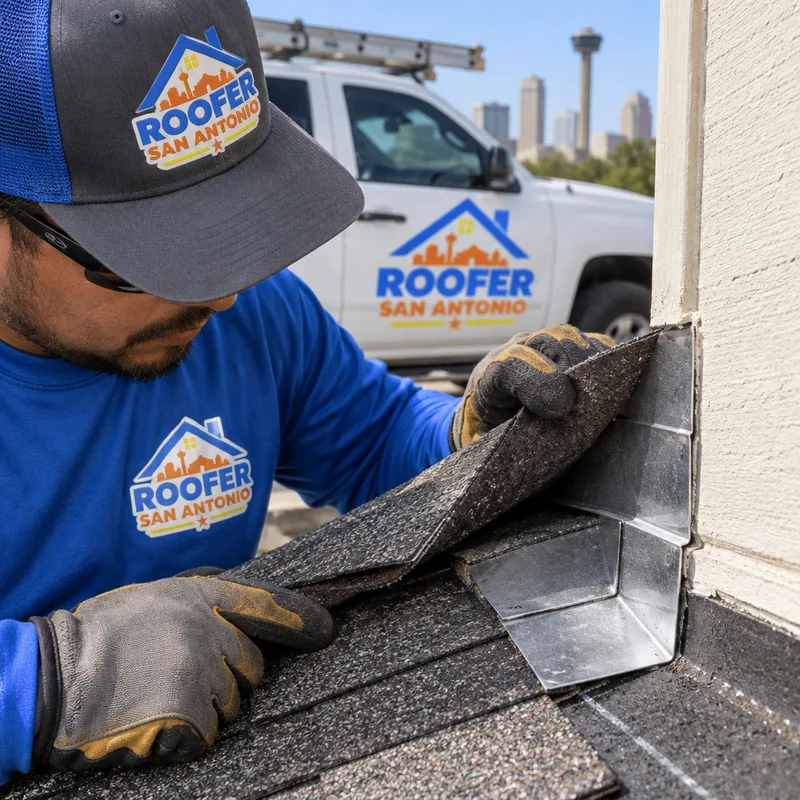
Step flashing and counterflashing failures can let water run behind siding or stucco and into the roof deck.
Describe what you're seeing once and we'll connect you with a local roofing contractor who handles leak tracing and repair in the San Antonio area.
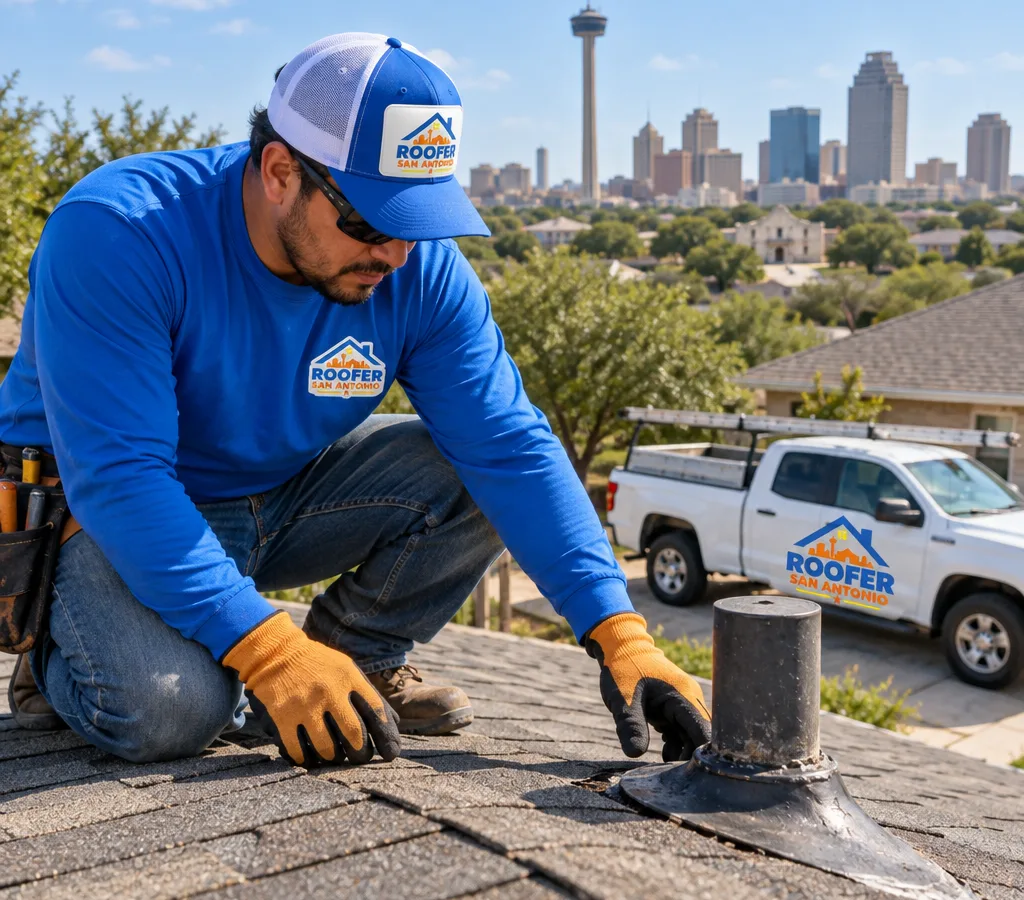
Roof leak repair in San Antonio usually starts with one job: find the entry point, not the ceiling spot where water shows up. Water can travel along decking seams, rafters, and insulation before it drips into a room, so the contractor will trace the leak from the roof side and the attic side when possible.
A solid leak repair visit typically includes:
San Antonio weather matters. Wind-driven rain and hail can damage seals, loosen flashing edges, and create small openings that only leak under certain storm angles. That's why the best fix is the one aimed at the actual pathway, not a patch placed where the drywall is wet.
If you're trying to decide who to talk to first, Roofer San Antonio keeps it simple: you describe the roof type, where the leak shows up, and what the last storm did, and we connect you with a local contractor who handles roof leak repair in San Antonio, Texas.
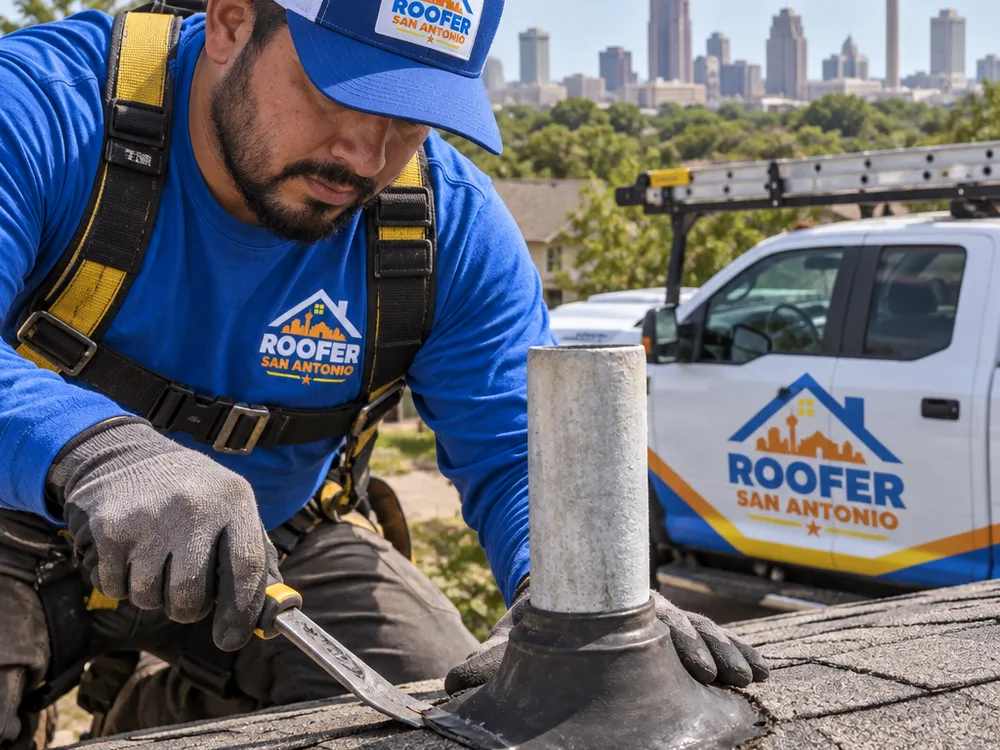
Step flashing and counterflashing failures can let water run behind siding or stucco and into the roof deck.
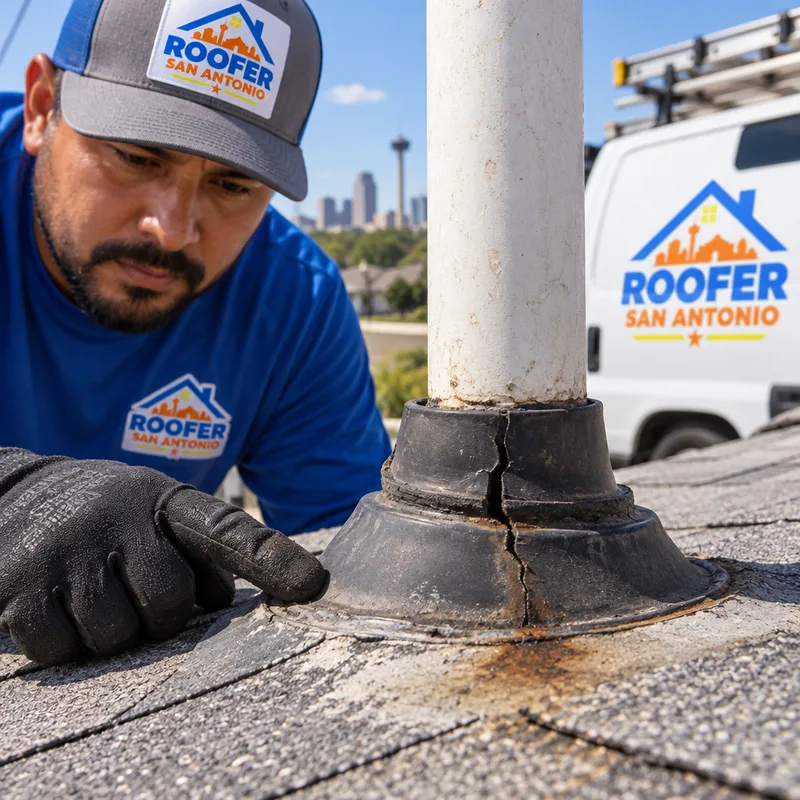
Cracked rubber collars, loose fasteners, or missing sealant can leak during heavy rain or when water backs up.
Valleys concentrate runoff. Debris, worn metal, or damaged valley lining can send water under shingles.
Lifted tabs, broken corners, nail pops, and punctures can leak intermittently, especially with wind-driven rain.
Flat or low-slope areas need the right membrane and detailing. A shingle-style patch often fails there.
Share where the leak shows up inside, what room it's in, and whether it happens only during certain storms. If you know the roof type and approximate age, that helps.
Roofer San Antonio takes your details once and connects you with an independent roofing contractor who works in the San Antonio area and handles leak repair.
Expect a roof inspection focused on penetrations, flashing lines, valleys, and any storm-impacted areas. If attic access is available, they may confirm the path from below.
Some leaks are a targeted fix, like replacing a pipe boot or reworking a flashing run. Others point to broader wear where additional roof repair is recommended.
You talk directly with the contractor about scope, materials, and scheduling, then choose whether to move forward.
If water is showing up inside, describe the symptoms once and get connected with a local contractor who can trace the entry point and talk through repair options.
CALL NOW: (210) 806-7822Not every leak calls for the same approach. Once the source is identified, a contractor will usually recommend one of these roof repair options.
This is common when the roof surface is generally holding, but one detail has failed.
Leaks at walls, chimneys, dormers, or areas where roof planes meet often come down to step flashing, counterflashing, and how water is directed back onto the roof covering. A proper repair is usually more than a surface seal. It involves removing enough material to tie the layers back together in the right order.
Valleys handle a lot of runoff. A contractor may clear debris, replace damaged valley metal, correct how shingle courses are cut, or address underlayment issues if water has been getting underneath.
Many homes have low-slope sections over patios, porches, or additions. Those areas may use modified bitumen, TPO, or another membrane system. The repair method depends on the membrane type and the condition of seams and penetrations.
Sometimes the leak is a symptom of widespread aging, multiple failed details, or storm damage across the roof. In those cases, the contractor may discuss broader roof repair or replacement as a separate decision. A clear overview of how roofers approach inspection and scope in the area can help when deciding between repair and replacement.
If the leak is active, focus on limiting interior damage. Move items out of the area, place a container to catch drips, and note when it leaks—steady rain versus wind gusts, or the first minutes of rain versus after a while. Avoid going onto the roof. Wet shingles and steep slopes are a fall risk, and walking on a compromised area can create more damage.

A targeted repair should restore a watertight surface and clean water-shedding lines.
The most useful details are where the leak shows inside, when it happens, and what roof features are above that area, such as a valley, vent pipe, chimney, skylight, or wall. If you can safely check from the ground, note any missing shingles or bent flashing after storms.
They start with the most failure-prone details—penetrations, flashing runs, and valleys—then look for water trails and damp wood in the attic when access allows. Intermittent leaks in San Antonio are often tied to wind-driven rain that pushes water sideways into small openings.
Sealants can be part of a repair, but a lasting fix usually depends on rebuilding the detail that sheds water, such as replacing a pipe boot or reworking step flashing. A surface smear can trap water, crack under heat, or mask the actual entry point until the next storm.
The typical issues are cracked pipe boot collars, exposed or backed-out fasteners, and gaps where flashing meets shingles. On some roofs, the problem is the underlayment or decking around the penetration, which is why contractors often inspect both the top side and the attic side.
Yes. Water can run along the underside of the roof deck or follow framing members before it drips, so the visible stain may be several feet away from the entry point. That's why a contractor will trace the path instead of repairing only the spot above the stain.
Roofer San Antonio connects you with a local roofing contractor who handles leak diagnosis and repair. You describe the problem once, then speak directly with the contractor about inspection findings, repair options, and next steps.
Pick up the phone and describe what's happening once. We'll connect you with a local San Antonio-area contractor who can trace the source and recommend the right roof leak repair.
Serving San Antonio and surrounding neighborhoods within roughly 10 miles — Alamo Heights, Stone Oak, Helotes, Leon Valley and more.