
New gutter installation
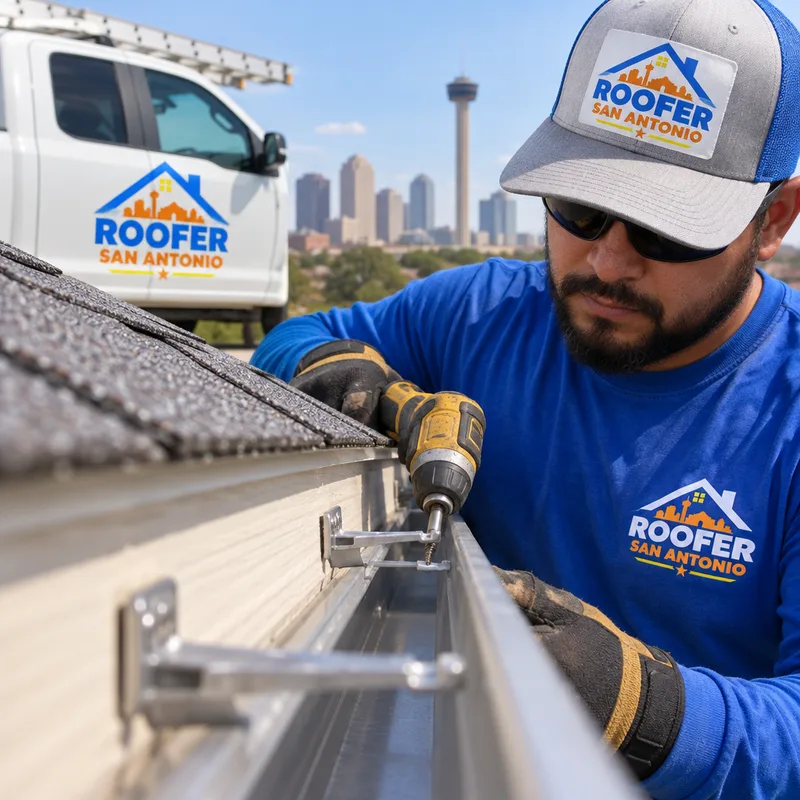
Add gutters where none exist, or replace mismatched sections so water is captured along the roofline and routed to the right discharge points.
Describe the runoff problem once and get connected with a local contractor who installs, repairs, or replaces rain gutters for your home.
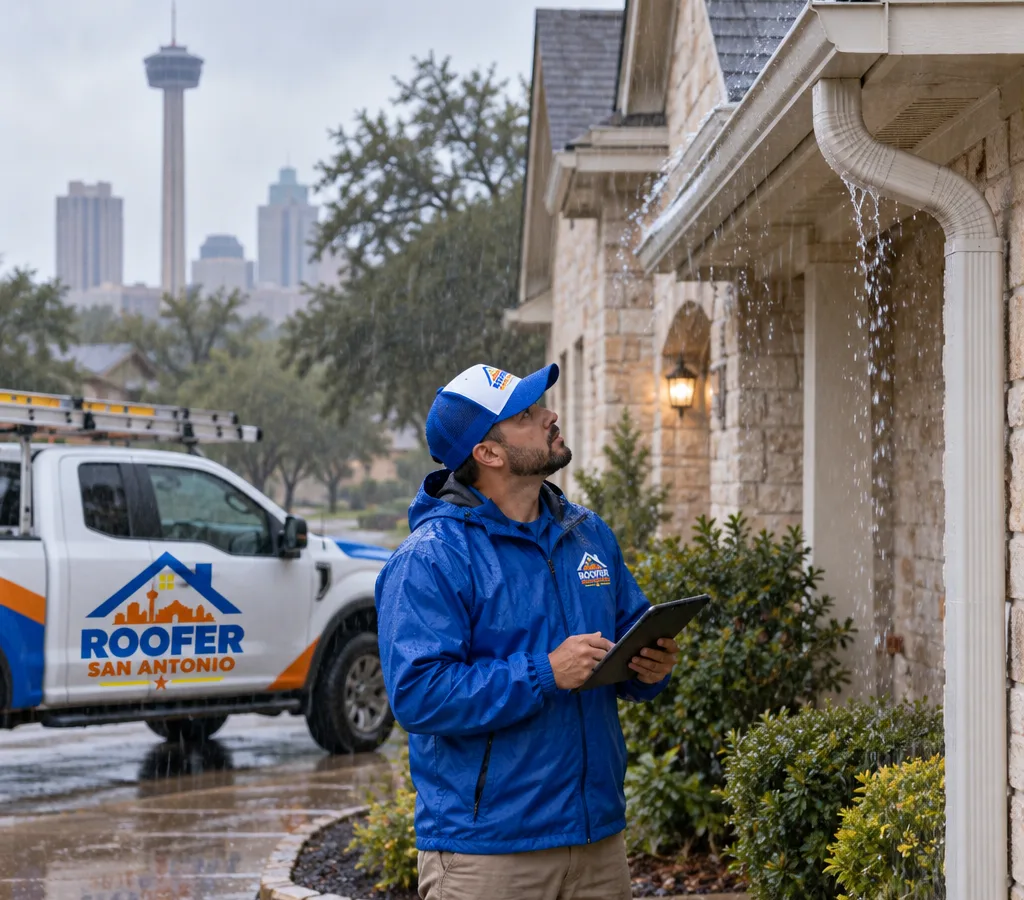
Rain gutters collect water at the roof edge and move it to downspouts so it can drain where it won't beat up your siding, soak the soil next to the foundation, or carve ruts into landscaping.
In San Antonio, storms can dump a lot of water in a short time. When gutters are missing, undersized, clogged, or pitched wrong, you may see overflow lines on fascia, water staining on brick or stucco, splashback onto lower walls, and erosion along the drip line. Another common clue is water spilling right at a corner or valley area, where multiple roof planes send runoff to one point.
If you're comparing rain gutters in San Antonio, it helps to think in terms of the whole drainage path:
Roofer San Antonio is a referral service. When you call, you describe what you're seeing and what kind of home you have, and we connect you with a local contractor who handles gutters San Antonio homeowners rely on for rain runoff control.
If your runoff issues start higher up, damaged roof edges and flashing can mimic gutter problems. Some homeowners also choose to speak with a contractor about roofing in San Antonio when drip edges, fascia, or roof transitions are part of the same water-management problem.
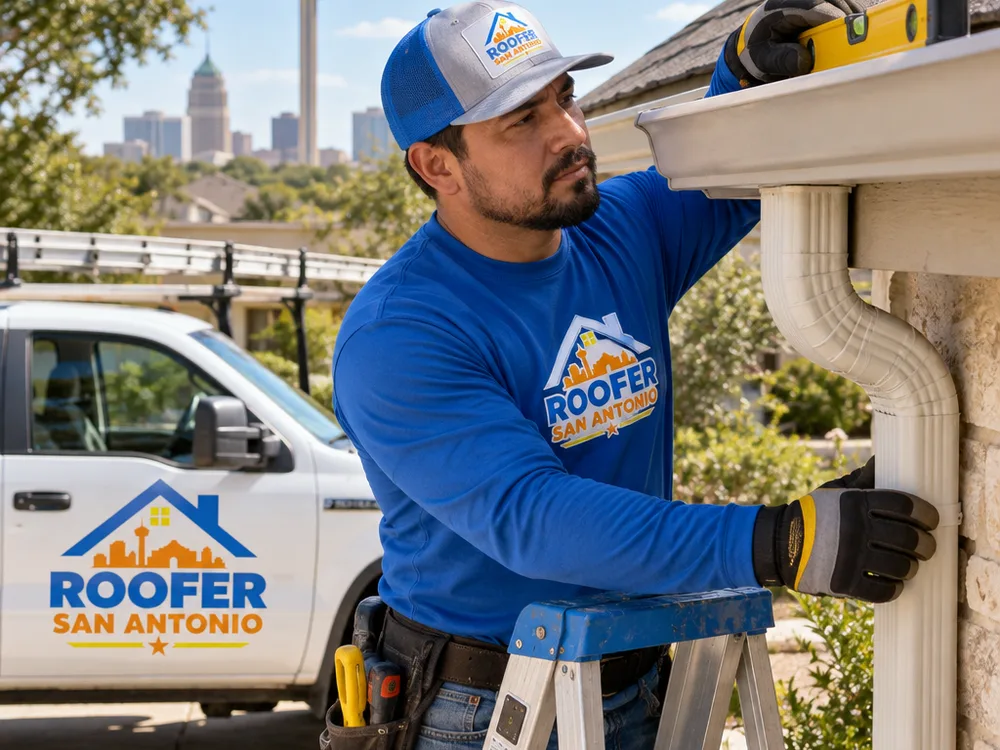
Add gutters where none exist, or replace mismatched sections so water is captured along the roofline and routed to the right discharge points.
Replace aging sectional gutters with continuous runs cut on site. Seams remain mainly at corners and outlets, and fewer joints can mean fewer drip points.
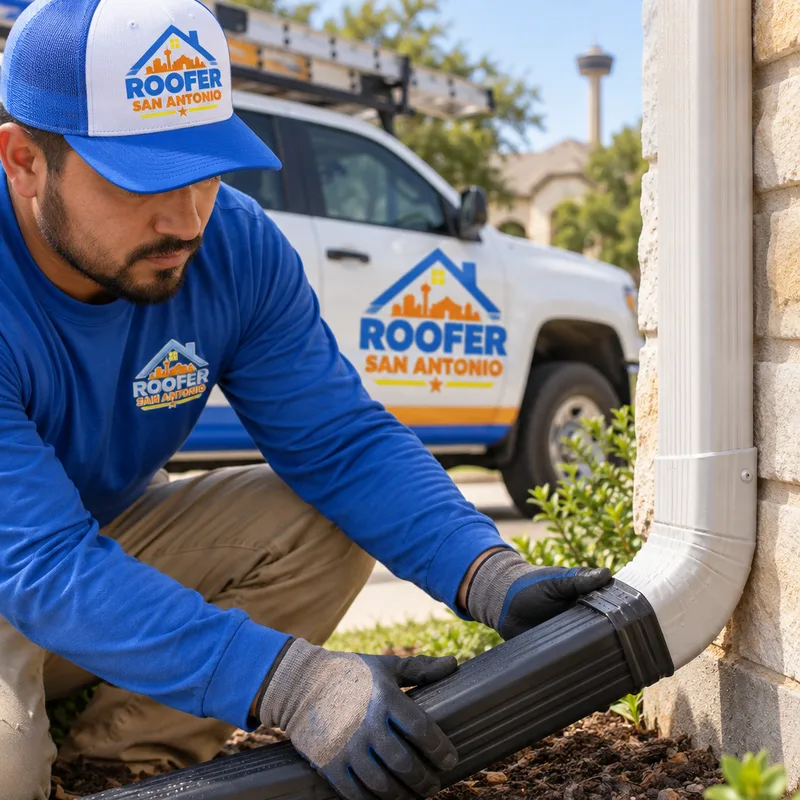
Add or re-route downspouts, elbows, and extensions so roof water exits where it won't undercut soil near the home.
Identify why gutters drip at joints, overflow at heavy-flow areas, or pull away from fascia, then recommend repairs or replacement based on what's failing.
Discuss guards or screens if debris buildup is a recurring issue. The right product depends on roof edges, tree cover, and how you want maintenance handled.
Share what's happening—overflow, dripping seams, or water dumping at corners—the home type, and any hard-to-reach areas.
You're routed to an independent contractor who works in the San Antonio area and handles gutter installation and repair.
A contractor typically checks fascia condition, drip edge, roof valleys, gutter pitch, hanger spacing, downspout locations, and where the water currently discharges.
The contractor explains options like sectional versus continuous runs, downspout routing, and repairs needed at corners, outlets, or fascia before gutters go up.
After work is completed, the contractor verifies alignment, checks for obvious leaks at corners and outlets, and confirms downspouts send water away from the structure.
If you're tired of guessing whether you need a small repair or a full replacement, describe the symptoms once and get connected with a local contractor who can evaluate the gutters and downspouts in person.
CALL NOW: (210) 806-7822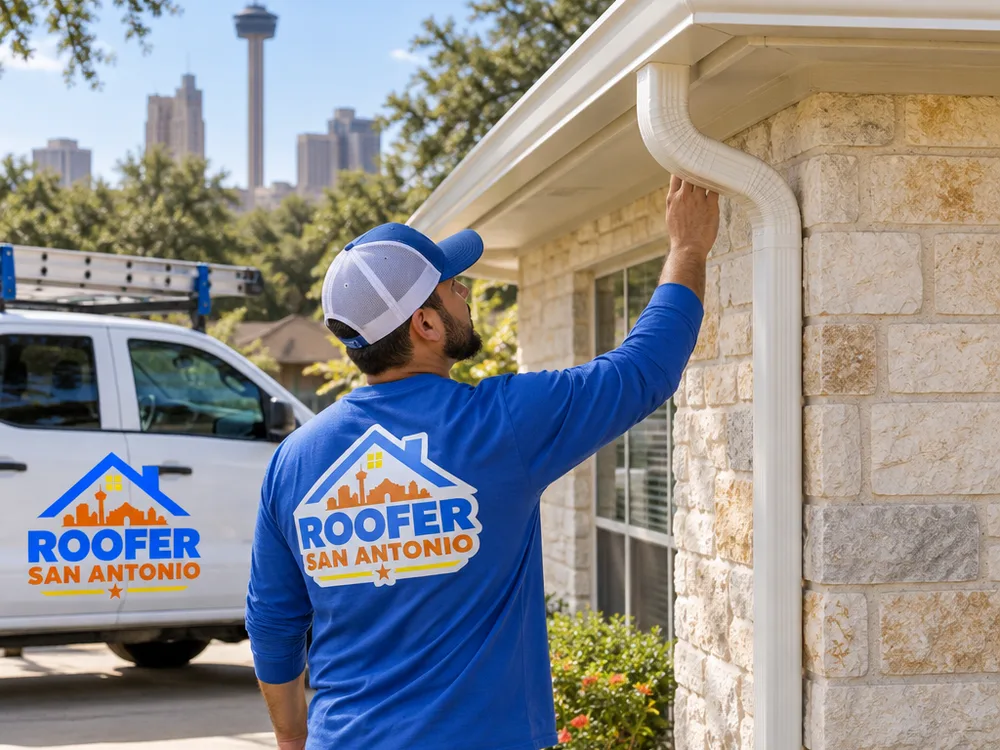
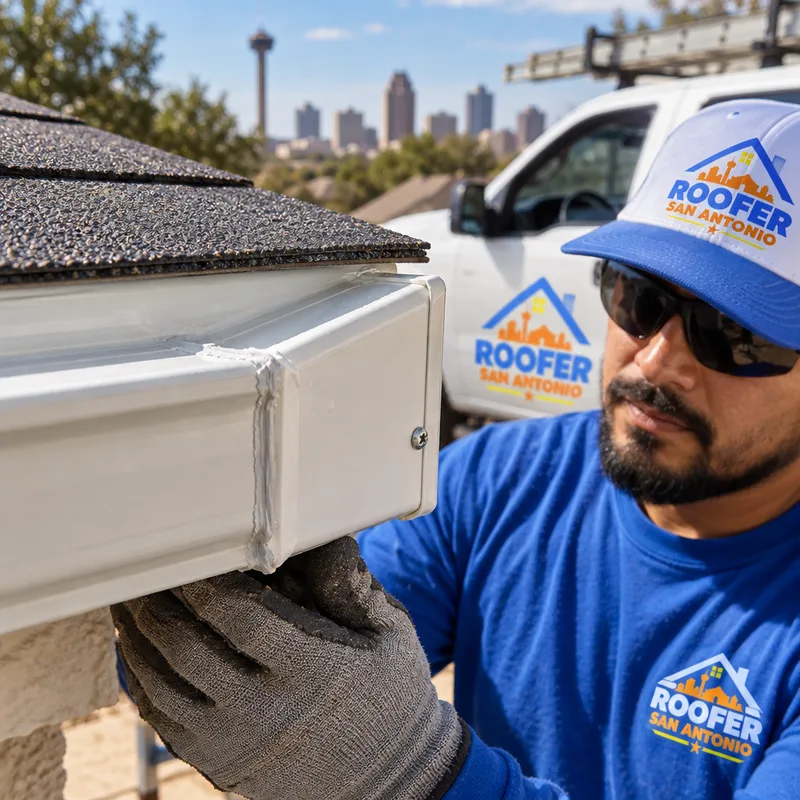
If the gutter run is straight and solid but leaks at a corner, outlet, or seam, repair may be enough. Replacement is more likely when gutters are bent, consistently sagging, pulling away from fascia, or overflowing because the system is the wrong size or layout for the rooflines and downspout locations.
The first checks are usually pitch toward the outlet, clogs in the trough or downspout, and whether a roof valley is dumping too much water into one section. In San Antonio storms, a single valley or long roof edge can overwhelm a poorly placed downspout, even when the gutter looks clean.
No, sectional gutters can work when installed and sealed correctly, but they have more joints where leaks can develop over time. Many homeowners choose continuous-run systems because most seams are limited to corners and outlets, which can simplify long-term leak troubleshooting.
Water behind the gutter often points to a roof-edge detail problem, like missing or misaligned drip edge, or the gutter sitting too low relative to the roof edge. A contractor typically checks the roof-to-gutter relationship before assuming the gutter itself is the only issue.
Downspout needs depend on roof area feeding each gutter run, where valleys concentrate flow, and where water can safely discharge. A contractor will usually propose downspout locations around corners or near high-flow sections, then route extensions so water exits away from the home rather than pooling at the base.
Yes, when gutters hold standing water or overflow repeatedly, the water can soak the fascia board and the roof edge area, leading to rot or peeling paint. If fascia is soft or deteriorated, the contractor may recommend addressing that before rehanging new gutters.
Have a quick description of the problem area—front, back, corner, or near a valley—how the water behaves, and whether the home is one-story or two-story. Mention anything that affects access, like steep rooflines, tight side yards, or landscaping under the eaves.
Leaf guards can reduce the amount of debris that settles in the trough, but they don't make the system maintenance-free. Contractors often explain what the guard can block, how it handles roof grit and shingle granules, and what inspection or cleaning still makes sense for your roof edges and tree cover.
You call and describe the gutter issue once, and we connect you with an independent local contractor who handles that type of work in the San Antonio area. You speak directly with the contractor about scope, timing, and any workmanship or product warranty terms, and you decide whether to move forward.
Explain what you're seeing at the roof edge, corners, and downspouts, and we'll connect you with a local contractor who works on rain gutters San Antonio homeowners rely on to control runoff.
Serving San Antonio and surrounding neighborhoods within roughly 10 miles — Alamo Heights, Stone Oak, Helotes, Leon Valley and more.