
Describe the job once
Instead of repeating the same roof story to multiple San Antonio roofing companies, you share the details one time and we connect you to a contractor who handles that type of work.
Describe what's going on with your roof once and we'll connect you with a local roofing contractor in San Antonio who handles that kind of work.
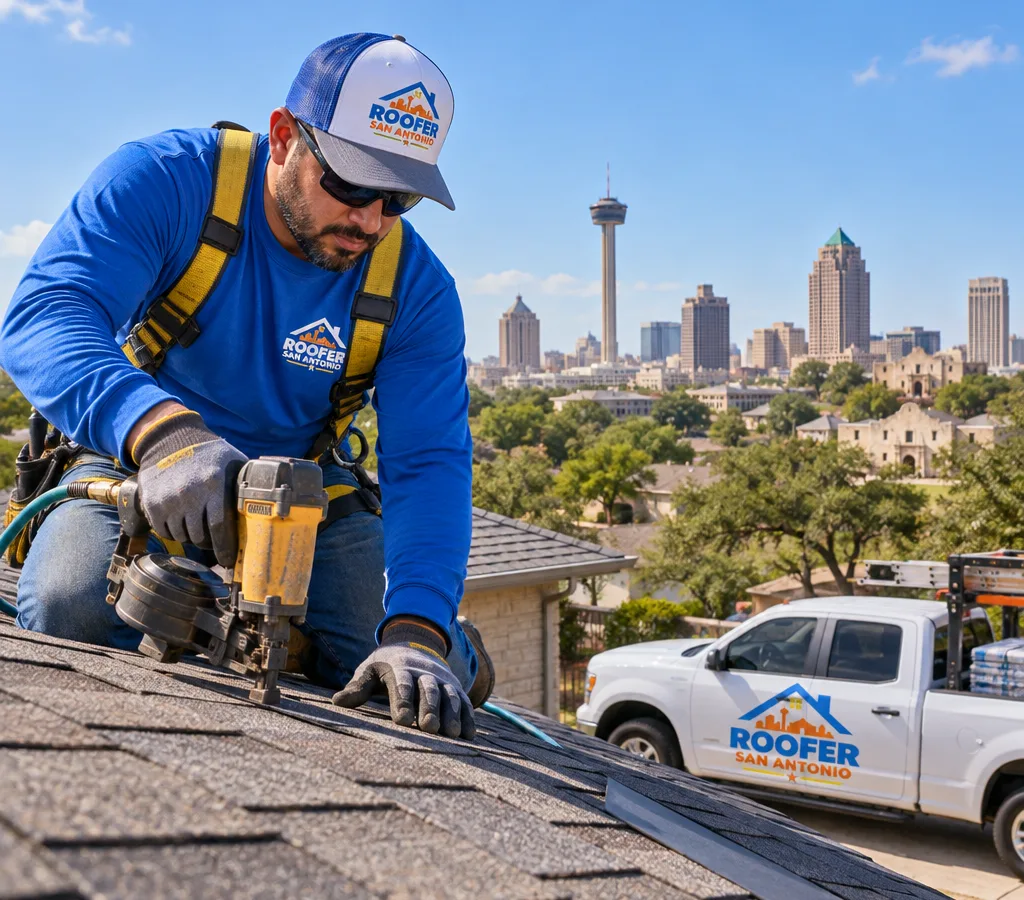
When you're searching for roofing companies in San Antonio TX, the hard part is not finding names. It's figuring out who actually does the kind of roof work you need, who can explain options clearly, and who will give you a scope you can compare.
Roofer San Antonio is a referral service. We take your call, get the basic details, and connect you with an independent roofing company in San Antonio, Texas that works on the type of job you're describing, whether that's tracking down a leak, replacing storm-damaged shingles, or planning a full roof replacement.
What to have ready when you call:
A good conversation upfront helps the contractor come prepared for an inspection that answers the right question: repair the problem area, or plan for replacement and address everything at once.
If you're still deciding what kind of pro you need, start with roofers in San Antonio who focus on residential roofing; the contractor you speak with can tell you whether your situation is a repair, a partial replacement, or a full reroof based on what they see on the roof and in the attic.
Instead of repeating the same roof story to multiple San Antonio roofing companies, you share the details one time and we connect you to a contractor who handles that type of work.
You'll speak directly with the local contractor about scope, materials, and what they found on the roof. You decide whether to move forward.
Some companies focus on repairs, others on replacement and reroofs. The goal is to connect you with a San Antonio roof company that fits the project you're describing.
San Antonio weather can mean sudden wind-driven leaks and shingle damage. A contractor used to local conditions will know what to look for at ridges, valleys, vents, and flashing.
When you get multiple bids, the easiest way to compare is by scope: tear-off vs overlay, underlayment type, flashing approach, ventilation plan, and cleanup details.
You describe the symptoms and the roof type as best you can, plus anything that may affect access, including height, pitch, penetrations, or trees.
We route your call to an independent contractor serving San Antonio who handles the kind of roofing work you're asking about.
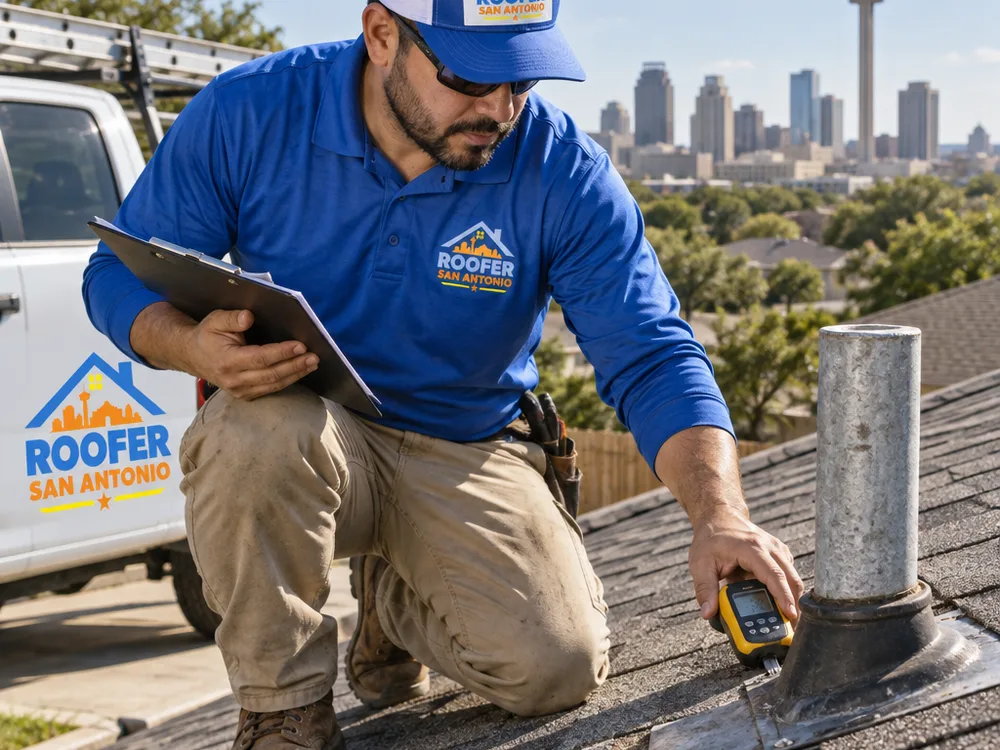
They'll typically check the roof surface, penetrations such as vents and pipe boots, flashings, valleys, and attic indicators like staining or damp decking.
The contractor provides the quote and proposed scope. You can ask questions, compare with other San Antonio Texas roofing companies, and choose what makes sense for your home.
If you're calling around to roofing companies in San Antonio, start by describing the roof problem once and get connected with a local contractor who can inspect and lay out your options.
CALL NOW: (210) 806-7822A reputable roofing company in San Antonio TX usually starts with the same core question: is the roof system still doing its job as a system, or is the failure spread out enough that replacement is the safer plan?
Here are common checks and what they mean:
1) Leak tracing (it's rarely straight up from the stain). Water can travel along decking, rafters, and underlayment before it shows up on drywall. Roofers will look at penetrations, step flashing at walls, chimney flashing, valley transitions, and low spots where water can back up.
2) Shingle condition and attachment. On asphalt shingles, contractors look for brittle tabs, widespread loss of granules, lifted edges, and nail pops. Wind damage often shows up as creased shingles or missing tabs. If the shingle field is generally intact and the problem is localized, repair may be on the table.
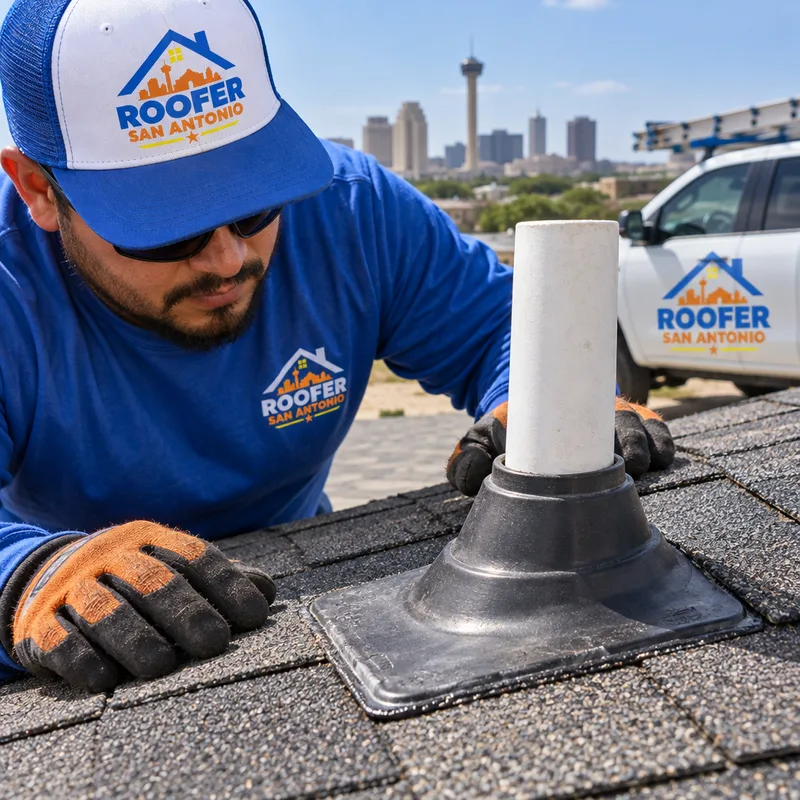
3) Flashing details. Flashing is where many roofs fail. That includes pipe boots, drip edge at eaves and rakes, counterflashing where the roof meets vertical surfaces, and valley metal or valley shingle weave where two roof planes meet.
4) Underlayment and decking condition. Underlayment is the secondary water-shedding layer under shingles, tile, or metal. If the roof has been leaking long enough, decking can show rot, delamination, or soft spots. Decking repairs change the scope and can push a borderline roof toward replacement.
5) Ventilation and heat/moisture management. In South Texas heat, attic ventilation and intake/exhaust balance matter for roof life and interior comfort. Contractors may check ridge vents, static vents, soffit intake, and signs of trapped moisture.
6) Number of layers and prior patch history. Multiple patch areas, mismatched materials, or previous overlays can complicate repairs and affect how a new roof would be installed.
When you talk with San Antonio roofing companies, ask them to explain what they saw and why it points to repair or replacement. Clear reasoning and a written scope make it easier to compare bids apples-to-apples.
If you already know you're planning a full replacement, a roof replacement company can walk you through tear-off, underlayment choices, decking repairs if needed, and how the crew protects landscaping and manages debris.
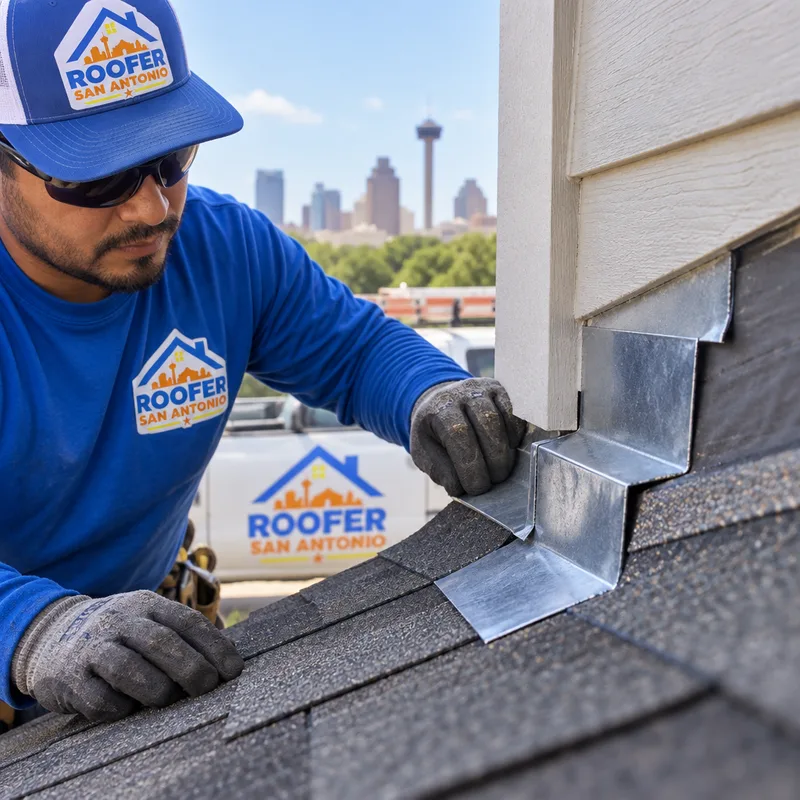
A finished roof scope should spell out underlayment, flashing approach, ventilation, and cleanup.
Start with the symptom, the roof type, and whether it followed wind or hail. If you can add the roof age and any prior repairs, the contractor you're connected with can plan the inspection and bring the right materials for likely fixes.
Repair is usually considered when the problem is isolated to a specific area like flashing, a vent penetration, or a limited patch of wind damage. Replacement is more likely when the roof shows widespread wear, repeated leaks, failing underlayment, or decking issues found during inspection.
Most leak investigations start at penetrations and transitions: pipe boots, vents, skylights, chimneys, valleys, and where the roof meets a wall. They may also check drip edge and gutters because water can back up at the eaves.
A replacement scope commonly covers tear-off or existing-layer handling, deck inspection and any needed sheathing replacement, underlayment, flashing, ridge and hip components, ventilation, and cleanup. Ask for materials and installation locations so you can compare proposals.
A full reroof is commonly a multi-day job, with the exact timeline depending on roof size, pitch, complexity, and whether decking repairs are needed. The contractor can give a schedule after seeing the roof and confirming scope.
Yes. The contractor gives the scope and quote directly, you ask questions, and you decide whether to proceed. Keep your comparison focused on written details such as underlayment, flashing, ventilation, and damaged decking.
Permit requirements can vary by municipality and the exact scope of work. The contractor you speak with can tell you what's typically required for your address and whether permit handling is included in their process.
Pick up the phone and describe what you're seeing on the roof. We'll connect you with a local contractor who can inspect, explain repair vs. replacement, and put a clear scope in front of you so you can decide.
Serving San Antonio and surrounding neighborhoods within roughly 10 miles — Alamo Heights, Stone Oak, Helotes, Leon Valley and more.