
Tear-off and deck check
The old roofing is removed so the contractor can check sheathing for rot or soft spots and confirm the nailing surface is sound before the new system goes on.
Describe what's happening once and we'll connect you with a local contractor who handles full roof replacement on San Antonio homes.
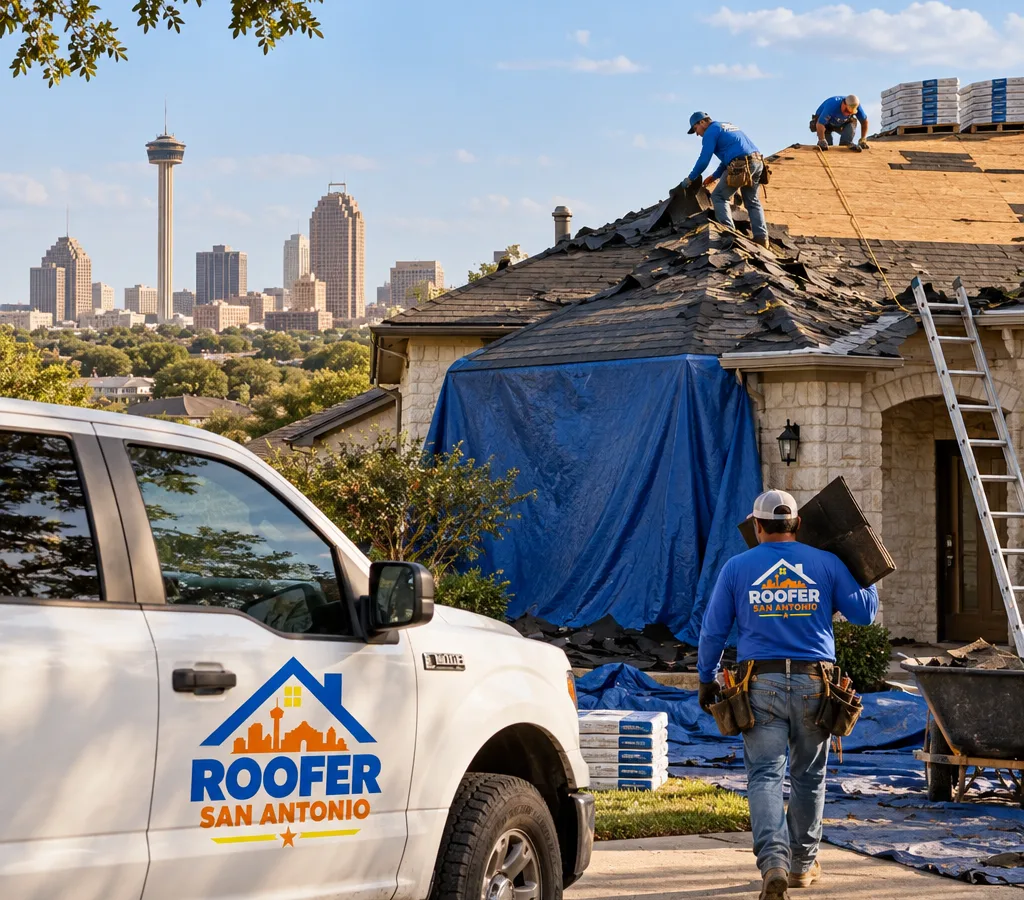
A roof replacement is a full removal and rebuild of the roof system on your home. It's the right move when the shingles or other covering are near the end of their service life, when storm damage is widespread, or when repeated repairs keep chasing leaks without solving the underlying problem.
In San Antonio, roof systems take a beating from high heat, strong UV exposure, and sudden downpours that can reveal weak flashing, worn underlayment, or soft decking. If you're seeing granules washing into gutters, shingles curling or cracking, recurring ceiling stains, or large areas of missing shingles after wind, it's time to talk through replacement options.
A San Antonio roof replacement also becomes more likely after multiple layers have been installed over the years. Adding more layers can hide deck issues and complicate future repairs. A contractor can look at how many layers you have, how the roof is ventilated, and whether the sheathing is sound before recommending a full reroof.
If you're still in the decision stage, Roofer San Antonio can take your call, collect the basics—roof type, what you're seeing, and any active leaks—and connect you with a local contractor who can inspect and advise on the next step.
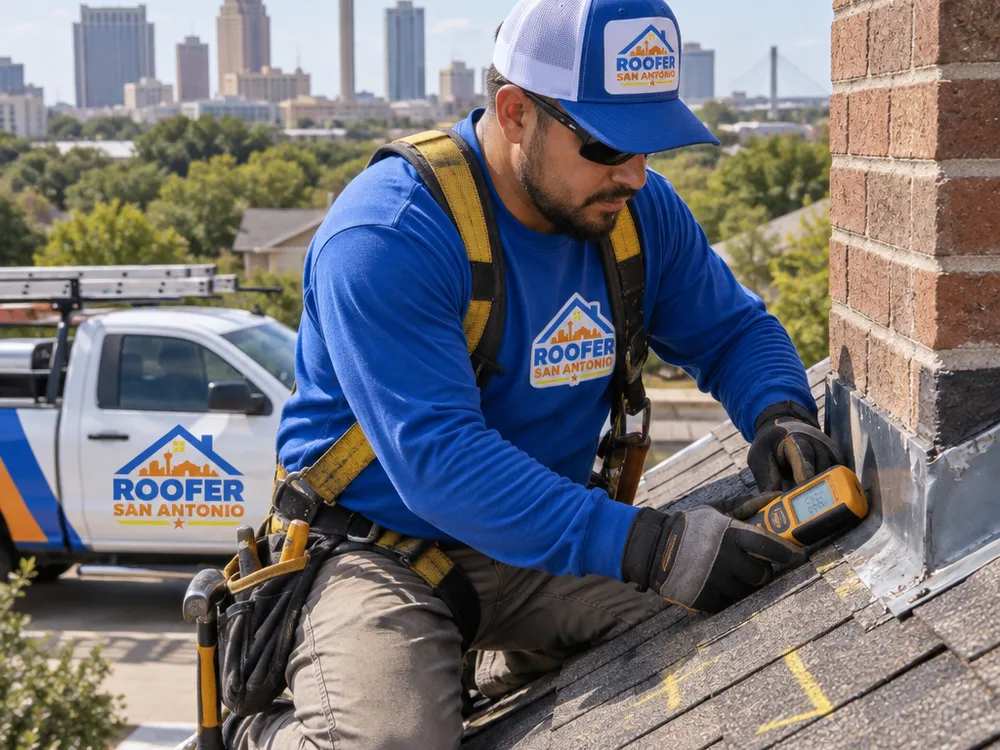
The old roofing is removed so the contractor can check sheathing for rot or soft spots and confirm the nailing surface is sound before the new system goes on.
A proper build includes the right underlayment and leak-prone details like valleys and penetrations handled with attention, not shortcuts.
Step flashing, pipe boots, drip edge, and transitions are common leak sources. Replacement is the time to renew them, not just reuse what's there.
San Antonio attics get hot. Balanced intake and exhaust ventilation helps the roof system perform as designed and reduces moisture risk.
Expect tarps, debris control, and a final magnet sweep around driveways and landscaping. Ask how the contractor protects AC units, patios, and plants.
Share the roof type—shingle, metal, or tile—its approximate age if known, and what you're seeing, such as leaks, missing shingles, soft spots, or hail impact marks. We use that to connect you with a local contractor who handles roof replacement San Antonio homeowners call for.
The contractor checks the roof surface, penetrations such as vents, skylights, and chimney areas, gutters and drip edge, attic ventilation, and signs of deck or moisture problems.
You'll talk through shingle grade and color, underlayment type, whether any decking needs replacement, ventilation changes, and how valleys and transitions will be built.
A full reroof is usually a multi-day job on an average home, depending on weather, roof complexity, and what's found under the old material. The contractor should walk the finished roof with you and explain maintenance and warranty terms.
If you're comparing options for a roof replacement San Antonio TX homeowners commonly face after wind and heat wear, describe your roof once and get connected with a local contractor who can take it from there.
CALL NOW: (210) 806-7822
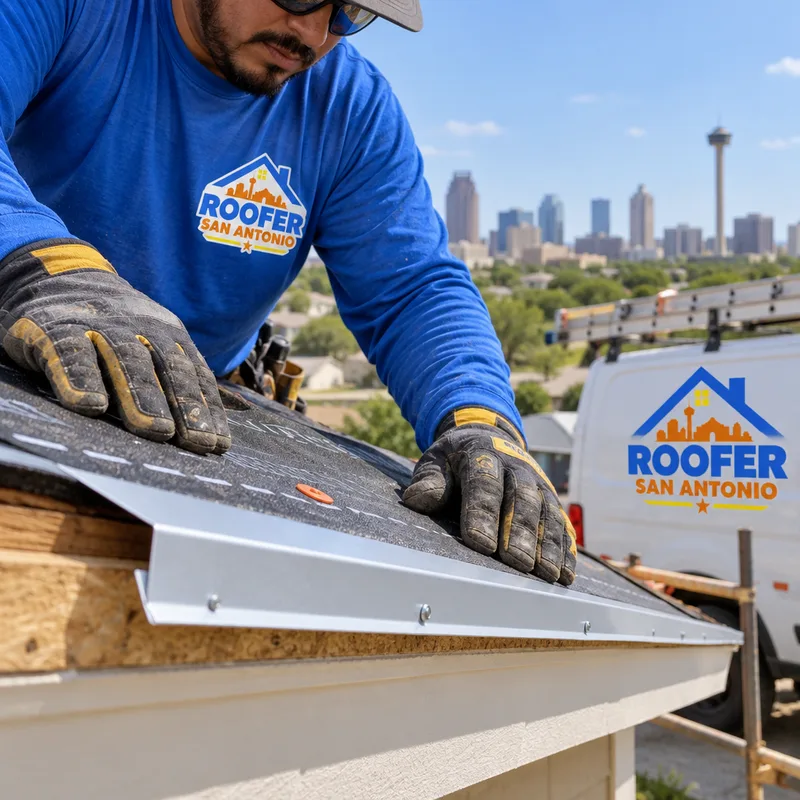
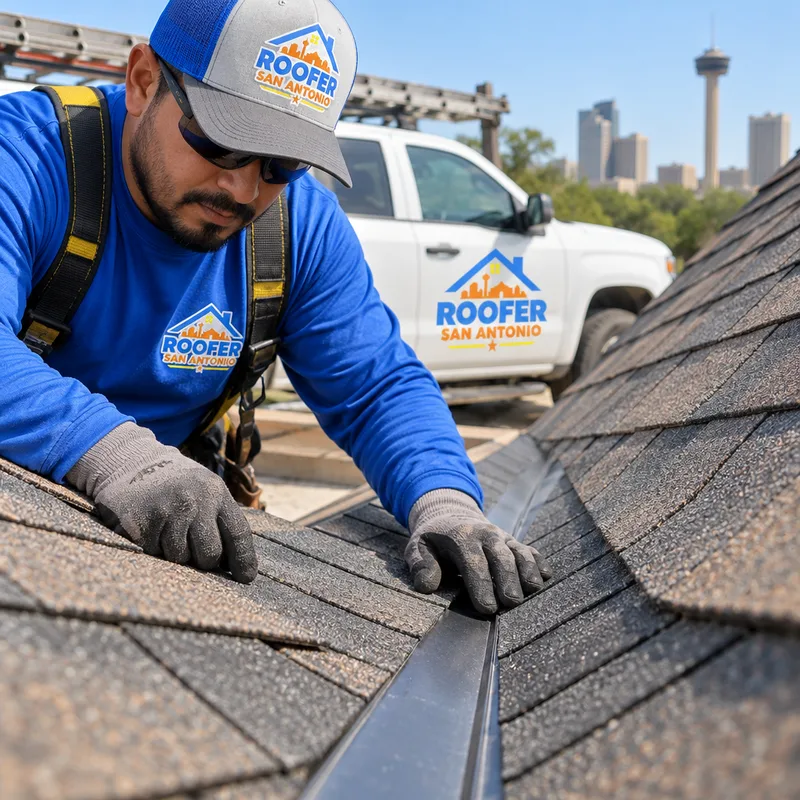
A finished roof should look uniform, with straight courses and clean ridge work.
The most helpful details are the roof type, the age if you know it, how many leaks you've had, and where the symptoms show up inside. If you can safely share photos from the ground—missing shingles, damaged flashing areas, sagging spots, or debris impact marks—the contractor you're connected with can narrow the likely scope before the visit.
A full tear-off is often recommended because it lets the contractor inspect the deck and rebuild the system from a known baseline. Whether it's required depends on the existing layers, the condition of the roof deck, and what local code and manufacturer instructions allow for the material being installed.
The contractor typically checks the field shingles, valleys, flashing at penetrations, roof-to-wall transitions, and gutter edges for water entry points. They also look for widespread granule loss, brittle shingles, repeated patching, and decking concerns that make isolated repairs less reliable.
Asphalt shingles are common on many homes, and standing-seam or exposed-fastener metal roofing is also used depending on style and budget preferences. Clay or concrete tile exists in parts of the area as well; if you have tile, replacement planning often includes underlayment condition and matching tile profiles.
Roof replacement is noisy and involves debris removal, material staging, and crew movement around the home. Plan to keep vehicles out of the driveway if requested, secure fragile items on walls or shelves, and keep pets inside or away from the work zone. Ask the contractor how they protect landscaping, patios, and HVAC units from debris.
Active leaks should be addressed right away to limit interior damage, even if replacement is the long-term plan. When you call, describe where the water shows inside and when it happens, such as during heavy or wind-driven rain, and the contractor can advise on temporary measures and next steps for the full replacement.
Permitting depends on the scope and local requirements, and roof replacement commonly triggers permit questions. The contractor can tell you what applies for your address and whether any inspections are part of the process; it's worth asking this early so scheduling and paperwork are built into the plan.
Compare the scope line by line: tear-off plan, decking replacement approach, underlayment type, flashing replacement details, ventilation changes, and cleanup method. It also helps to ask each contractor to explain how valleys, penetrations, and roof-to-wall transitions will be built, since those details often decide how well the roof handles heavy rain.
Roofer San Antonio is a referral service that connects homeowners with local contractors who perform the work. You describe the situation once, then you speak directly with the contractor about the evaluation, the scope, and whether you want to move forward.
Yes. We connect homeowners in San Antonio and surrounding communities with contractors who serve the area. Mention your neighborhood or suburb and any access notes, such as a gated community, tight driveway, or steep roof, and we'll route the request to a contractor who works in your area.
Take a minute to describe your roof, what you're seeing, and any leak timing. We'll connect you with a local San Antonio contractor who can evaluate the roof and explain the replacement plan options.
Serving San Antonio and surrounding neighborhoods within roughly 10 miles — Alamo Heights, Stone Oak, Helotes, Leon Valley and more.