
The roof type is confirmed first
Asphalt shingles, clay or concrete tile, and metal roofs each call for different products and pressure levels, and the plan changes around flashing and penetrations.
Describe the roof staining or buildup once and we'll connect you with a local contractor who handles roof washing and roof cleaning in the San Antonio area.
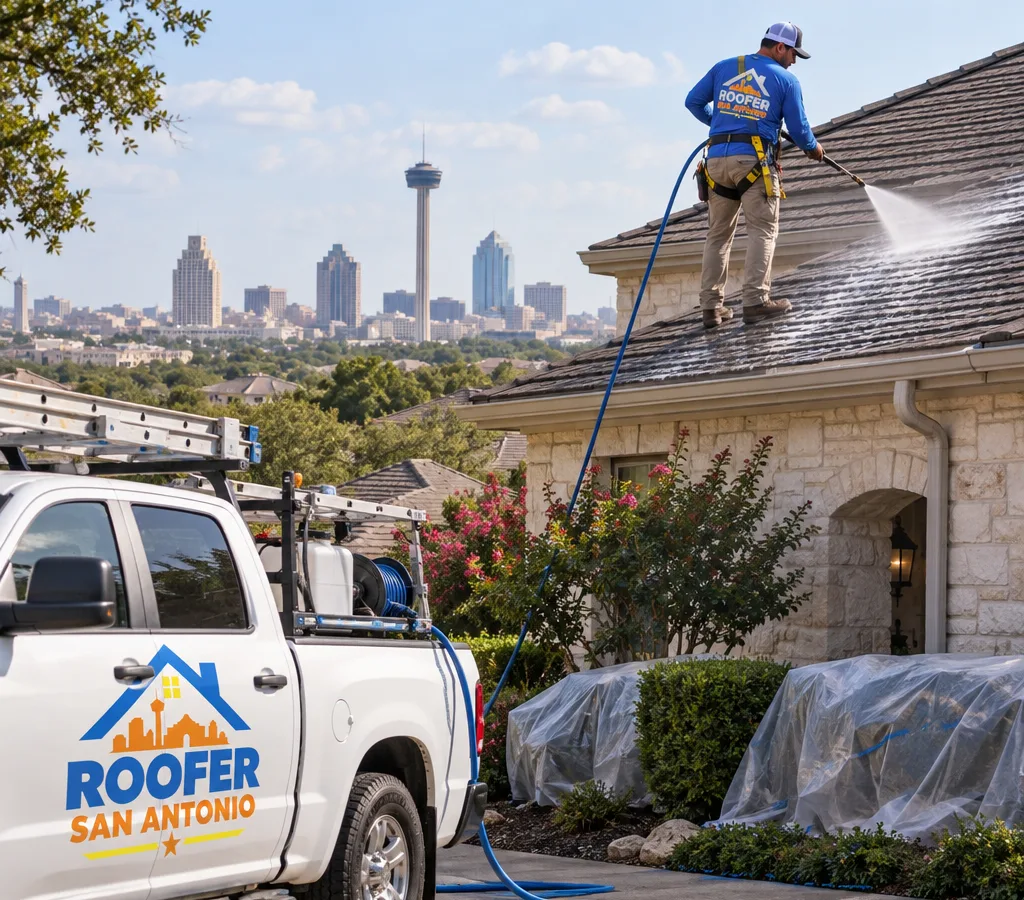
San Antonio roof cleaning is about removing the organic and airborne buildup that sits on the surface of shingles and tiles. On many homes, it shows up as dark streaking, patchy discoloration, and a dull, dirty look that makes the whole house feel older than it is.
A contractor will usually start by identifying your roof type and the kind of staining present. That matters because the safest approach for asphalt shingles is typically a low-pressure application of a roof-safe cleaning solution, followed by a controlled rinse. High pressure can strip granules off shingles, drive water under edges, and shorten roof life. For many homeowners, the main choice is not whether to clean, but how to clean.
In this part of Texas, roofs collect a mix of dust, pollen, and organic growth. The heat and sun can bake grime into place, while shaded roof planes—under trees or on north-facing slopes—can hold moisture longer and grow darker stains. Roof washing in San Antonio is often as much about preventing recurring buildup as it is about getting the roof looking even again.
Before any washing starts, a good contractor will look for roof conditions that change the plan, such as loose or brittle shingles, exposed nail heads, failing pipe boot flashings around vent penetrations, and areas where water already has a path. If the roof is near the end of its service life, cleaning can still be possible, but the contractor may recommend a gentler approach and may point out repairs to address first.
If your roof is also having water-entry problems, it helps to address that separately with a roofer. Many homeowners handle cleaning first for appearance, then deal with repairs or replacement later. If you're weighing repair work as well, roofers in San Antonio can be a helpful starting point for getting connected to the right trade for the situation.
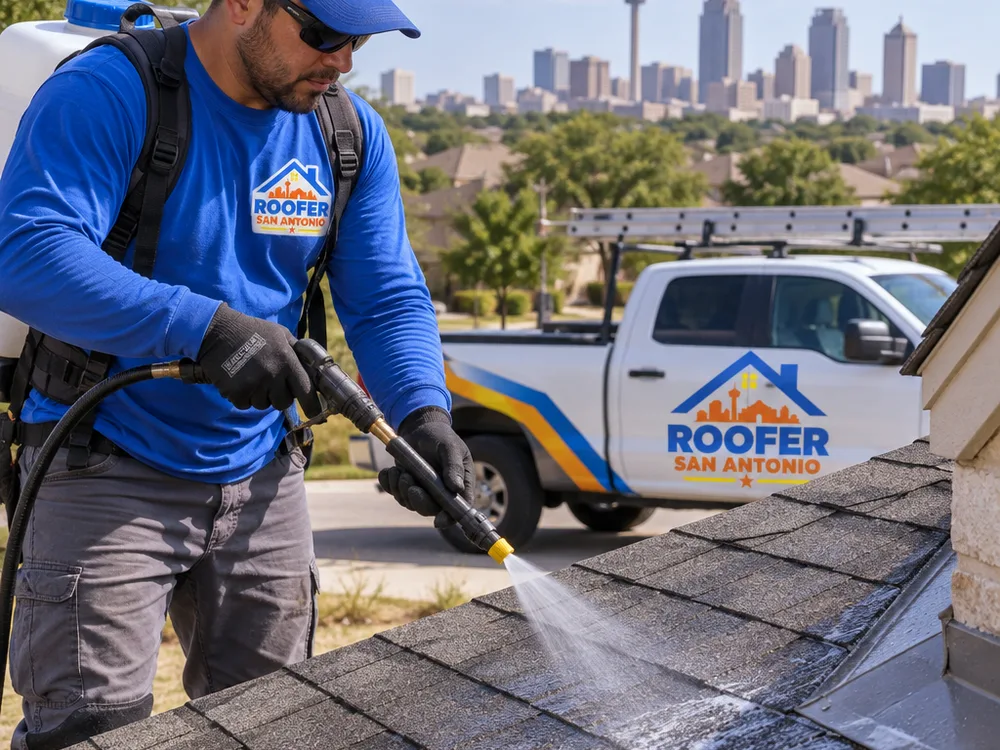
Asphalt shingles, clay or concrete tile, and metal roofs each call for different products and pressure levels, and the plan changes around flashing and penetrations.
Contractors typically protect landscaping, pre-wet vegetation, and manage runoff so cleaning solution does not sit on plants, painted surfaces, or porous masonry.
Roof cleaning is usually a chemical treatment plus a controlled rinse, not aggressive mechanical scrubbing that can damage shingle granules or tile finishes.
The contractor can explain what they're seeing on your roof, what method they recommend, and what conditions might limit how uniform the roof looks right away.
You speak with the contractor directly, ask your questions, and decide whether and when to proceed.
Tell us your roof material if you know it, the areas that look stained, whether the roof is steep, and anything that affects access such as trees, a patio cover, or solar panels.
Roofer San Antonio connects you with an independent contractor who handles roof cleaning and roof washing in the San Antonio area.
The contractor will ask about the roof's age, prior repairs, and the kind of staining you've noticed, then explain the method they recommend for your roof type.
You coordinate directly with the contractor on logistics like water access, protecting landscaping, and what needs to be moved away from downspouts and splash zones.
If roof stains or buildup are spreading across the shingles, describe the situation once and get connected with a local contractor who can handle roof cleaning without guessing at the right method for your roof.
CALL NOW: (210) 806-7822
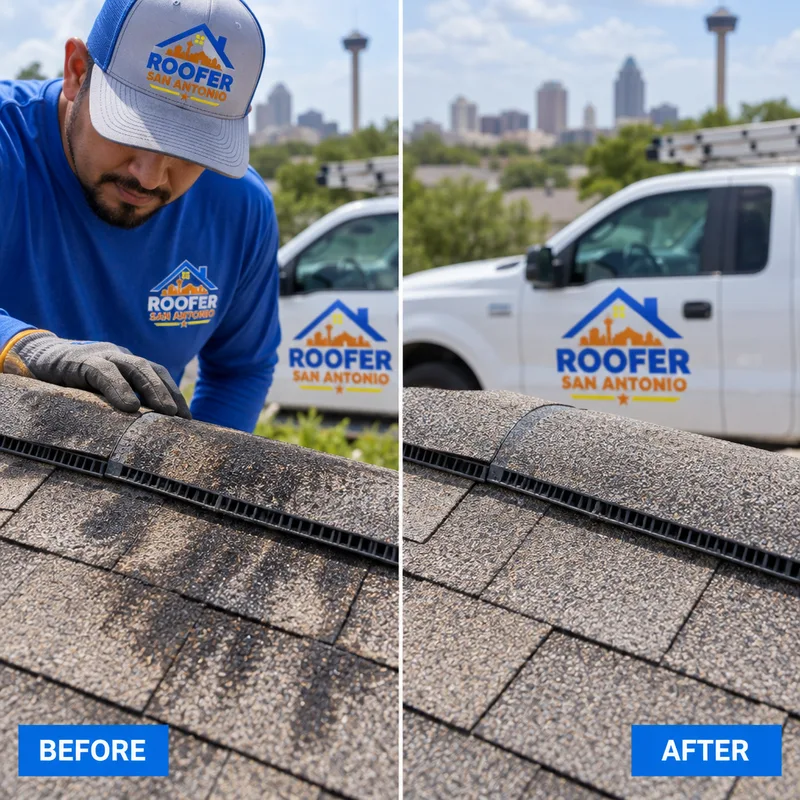
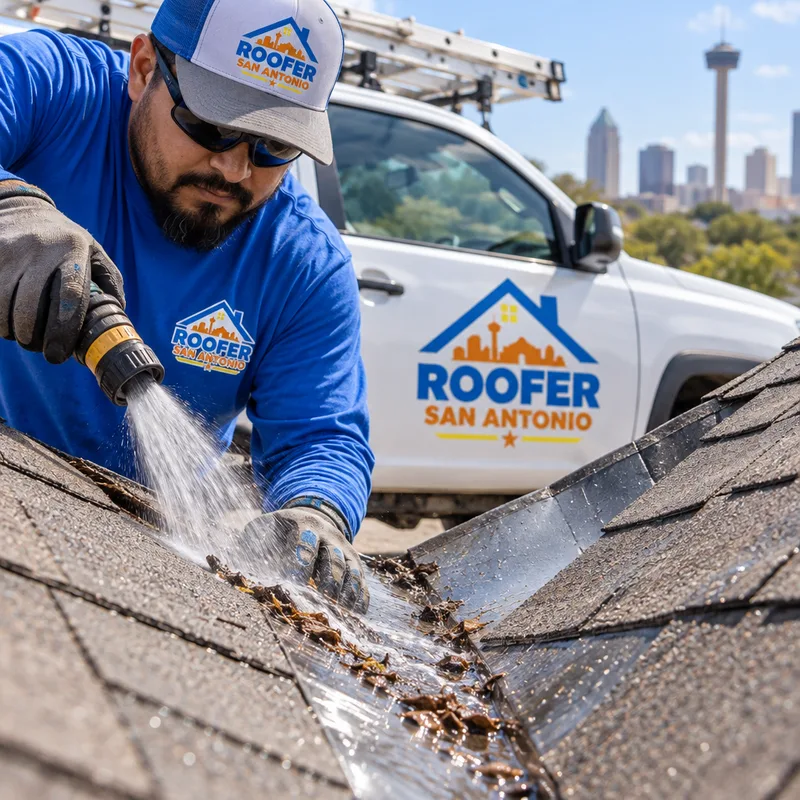
The cleaning plan should account for roof material, drainage paths, sensitive details, and protection for the surfaces below.
High pressure on asphalt shingles can remove protective granules and force water into seams, so many contractors avoid it for shingle roofs. For roof cleaning in San Antonio, the common approach is a roof-safe solution applied at low pressure with a controlled rinse, adjusted for roof pitch and drainage paths.
Black streaks are often caused by airborne growth that holds onto the shingle surface and traps dirt over time. A contractor can confirm whether it is organic staining, general grime, or another issue—like soot or HVAC exhaust—and choose a cleaning method that fits your roof material.
Some roofs look noticeably more even right after washing, while others improve gradually as weather rinses away remaining residue after treatment. The contractor can set expectations based on the type of staining, how long it has been present, and the roof's texture and color.
Share the roof type—shingle, tile, or metal—the general age if you know it, where the staining is worst, and any access issues like tall trees or a steep pitch. If you've had past repairs around vents or chimneys, mention that too because it can affect how the contractor works around flashing.
Many homeowners choose to be present at the start so the contractor can confirm water access, point out sensitive landscaping, and review any areas of concern. After that, the contractor can tell you what they need from you based on how the property is set up and how runoff will be managed.
It can, but the contractor may change how they apply and rinse around panel edges, wiring routes, and mounting hardware. With heavy tree cover, they may also recommend removing debris from valleys and gutters first because trapped leaves and needles can hold moisture and keep staining coming back.
Roof cleaning is about treating and removing growth and grime from roofing materials without damaging granules, tile finishes, flashing, or underlayment. If you also need gutter work or exterior washing, mention it on the call so you can be connected with a contractor who handles the full scope, but the roof method should still be chosen for the roof material first.
Tell us what kind of roof you have and what you're seeing on it, and Roofer San Antonio will connect you with a local contractor who handles roof washing and roof cleaning for San Antonio homes.
Serving San Antonio and surrounding neighborhoods within roughly 10 miles — Alamo Heights, Stone Oak, Helotes, Leon Valley and more.